

7joursTreks du Kilimandjaro
Trek de 7 jours au Kilimandjaro, voie Machame
Porte de Machame · Shira · Barranco · Barafu · Uhuru Peak · Porte de MwekaHébergement: Camping en montagne
Prix sur demande
Voir l'itinéraire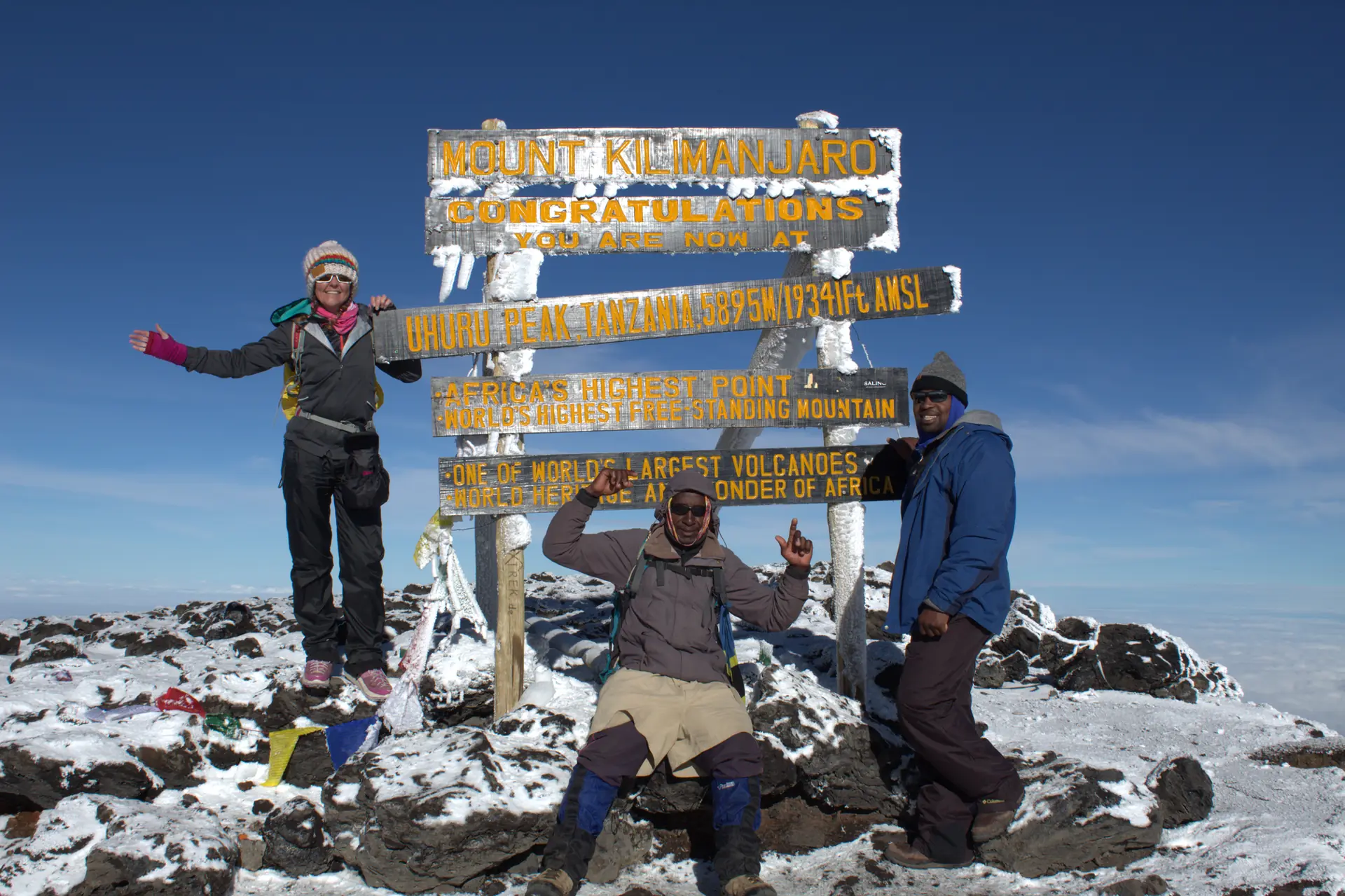
La seule voie avec des refuges plutôt que des tentes, sur un sentier bien balisé à la montée comme à la descente. Un sixième jour à Horombo s'ajoute facilement et rend l'ascension nettement plus facile.
Une ascension de cinq jours pour les voyageurs actifs et souples qui aiment l'aventure. Même le trek le plus facile demande un effort.
Chaque itinéraire peut être personnalisé, avec un hébergement économique, de milieu de gamme ou de luxe.

Jour 1
Transfert privé de l'aéroport du Kilimandjaro à votre hôtel sur les bas de la montagne. À 17 h 30, briefing avant l'ascension et contrôle du matériel, ainsi que vérification de votre couverture médicale et de votre assurance.
Nuit 1 Nuit (ou similaire)
Jour 2
Après les formalités à la porte, marche à travers la forêt tropicale jusqu'au premier refuge, où vous dînez et passez la nuit.
Nuit 2 Nuit (ou similaire)
Jour 3
Une montée raide en forêt débouche sur la lande, avec vue sur le Kibo et le Mawenzi. Vous arrivez au refuge en milieu d'après-midi.
Nuit 3 Nuit (ou similaire)
Jour 4
Montée progressive dans le désert lunaire de la selle entre le Mawenzi et le Kibo. Il n'y a pas d'eau courante à Kibo Hut. Repos et coucher tôt avant le sommet.
Nuit 4 Nuit (ou similaire)
Jour 5
Réveil avant minuit et montée régulière dans les éboulis meubles jusqu'à Gillman's Point au lever du soleil. Les plus forts poursuivent jusqu'à Uhuru Peak, puis descente par Kibo Hut jusqu'à Horombo Hut.
Nuit 5 Nuit (ou similaire)
Jour 6
Descente devant Mandara Hut jusqu'à la porte de Marangu, où les alpinistes qui réussissent reçoivent leur certificat de sommet, puis transfert à l'hôtel.
Nuit 6 Nuit (ou similaire)
Jour 7
Adieux à l'équipe. Un transfert privé vous conduit à l'aéroport du Kilimandjaro, ou vers un safari ou une extension balnéaire si vous le souhaitez.

Kilimandjaro
Type de chambre: Confirmé dans votre devis
Formule repas: Confirmé dans votre devis
Kilimandjaro
Type de chambre: Confirmé dans votre devis
Formule repas: Confirmé dans votre devis
Kilimandjaro
Type de chambre: Confirmé dans votre devis
Formule repas: Confirmé dans votre devis
Kilimandjaro
Type de chambre: Confirmé dans votre devis
Formule repas: Confirmé dans votre devis
Les lodges et camps sont indiqués « ou similaire ». Les photos montrent les environs ; votre devis précise les chambres exactes.
Nous n'affichons que des avis authentiques et vérifiables, issus des plateformes où nos voyageurs les ont rédigés.
Non. Le Kilimandjaro est une randonnée, pas une escalade technique, et ne demande ni équipement spécial ni compétences d'alpinisme. En revanche, vous devez être en forme.
Sur la voie Machame en sept jours, plus de 95 % de nos participants atteignent le sommet, grâce au jour d'acclimatation supplémentaire et à une préparation soignée. Les taux de réussite sont plus faibles sur les voies plus courtes.
Oui. Une assurance voyage et médicale complète est obligatoire pour l'ascension.
Non. Les pourboires pour les guides, les porteurs et le cuisinier sont d'usage et ne sont pas compris dans le prix.
Oui. C'est une combinaison très appréciée, et nous organisons l'ensemble du voyage pour vous. Consultez nos pages Safari + Kilimandjaro et Safari + Zanzibar.
Dites-nous ce que vous avez en tête, nous répondrons avec des conseils honnêtes et un devis sur mesure.
L'acompte, les moyens de paiement, l'annulation et les remboursements sont détaillés dans nos conditions de réservation. Lire les conditions de réservation
Hébergement: Camping en montagne
Prix sur demande
Voir l'itinéraireHébergement: Camping en montagne
Prix sur demande
Voir l'itinéraireHébergement: Camps de montagne, puis lodges
Prix sur demande
Voir l'itinéraireHébergement: Hôtel et lodge sur le rebord du cratère
Prix sur demande
Voir l'itinéraireHébergement: Lodge ou camp, selon le devis
Prix sur demande
Voir l'itinéraireHébergement: Lodges et camps de tentes
Prix sur demande
Voir l'itinéraireCe texte est disponible en anglais uniquement.
Our trips are for active, flexible-minded people who enjoy the unusual and the adventurous. For trips that have an emphasis on mountain climbing and wildlife safari , you need to remember that even the easiest trekking or walking safari involves some exertion, so you should be reasonably fit and sure that you will enjoy the activity
The best Months for climbing Mount Kilimanjaro are January, February and also August and September. January to February is the warmest months, almost clear of clouds each evening and morning. July can be colder and November to December can be wet.
November is usually short rains but it is not often rains all the days so Climbing is possible. Normally March, April and May are the months with long rains and should be avoided.
The success rates with our guides are outstanding compared to the overall success rates for all climbers who attempt to reach the top Summit Success Rates: Gilman’s Point (99%). Uhuru Peak (90%).
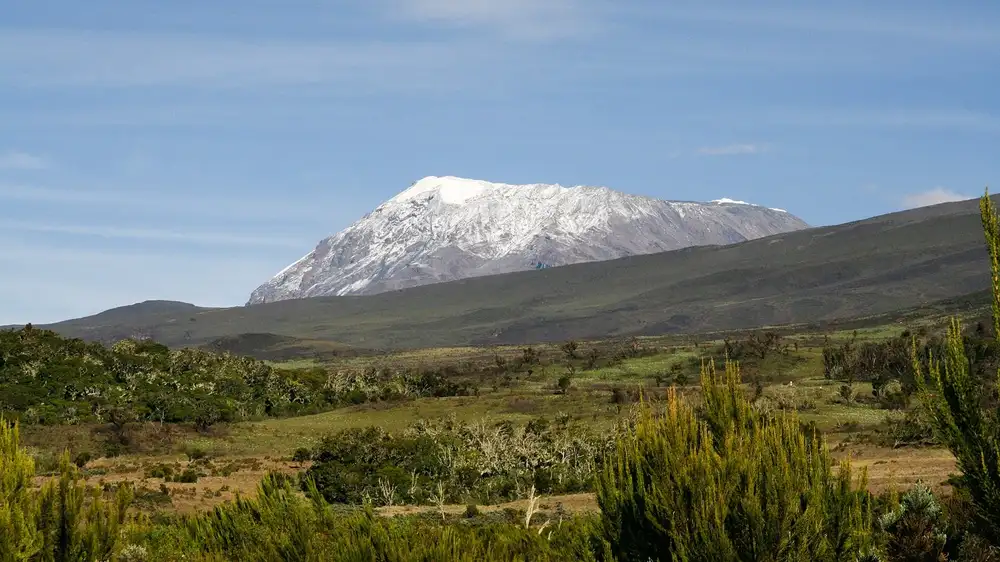
Arrive anytime at Kilimanjaro International Airport (JRO), there will be a private transfer waiting at the airport to pick you to Kilimanjaro Mountain Resort in Marangu.
All airport transfers are the part of the package, no extra fee is required.
We stay at Kilimanjaro Mountain Resort, which is a beautiful Hotel located on the lower slopes of Mount Kilimanjaro and is a perfect place to prepare you for adventure.
We will gather in the evening at 5:30 pm for a pre-climb briefing and an equipment check.
We will also confirm you have the appropriate mandatory medical coverage and travel insurance.

After having your breakfast we will make a short journey from your hotel in Marangu to National Park gate for the necessary formalities at the gate. We start the climbs through fascinating tropical rain forest; we reach the first hut at Mandara for dinner and overnight. An alternative is to simply rest and relax the beautiful forest around the camp. Marangu Gate to Mandara Hut (2,700 m): 5-6 hours walking.
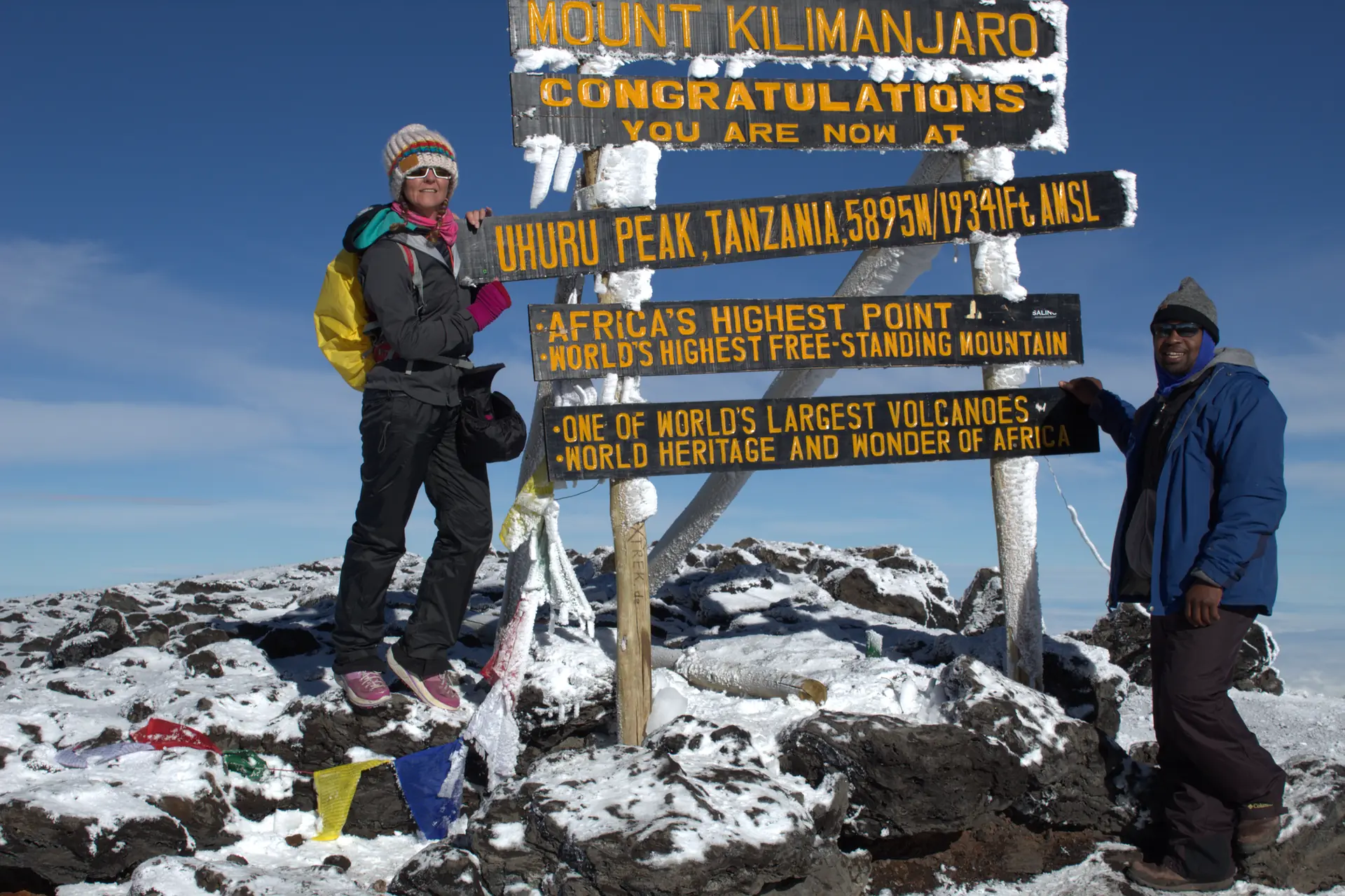
Today the first part of the walk is a steep ascent through forest, but the path soon opens out into moorland and, in clear weather, there are great views of Kibo and Mawenzi peaks.
We arrive at Horombo Hut mid-afternoon, where you can relax and enjoy the stunning scenery around the camp. Mandara Hut to Horombo Hut (3,720 m): 4-6 hours walking.
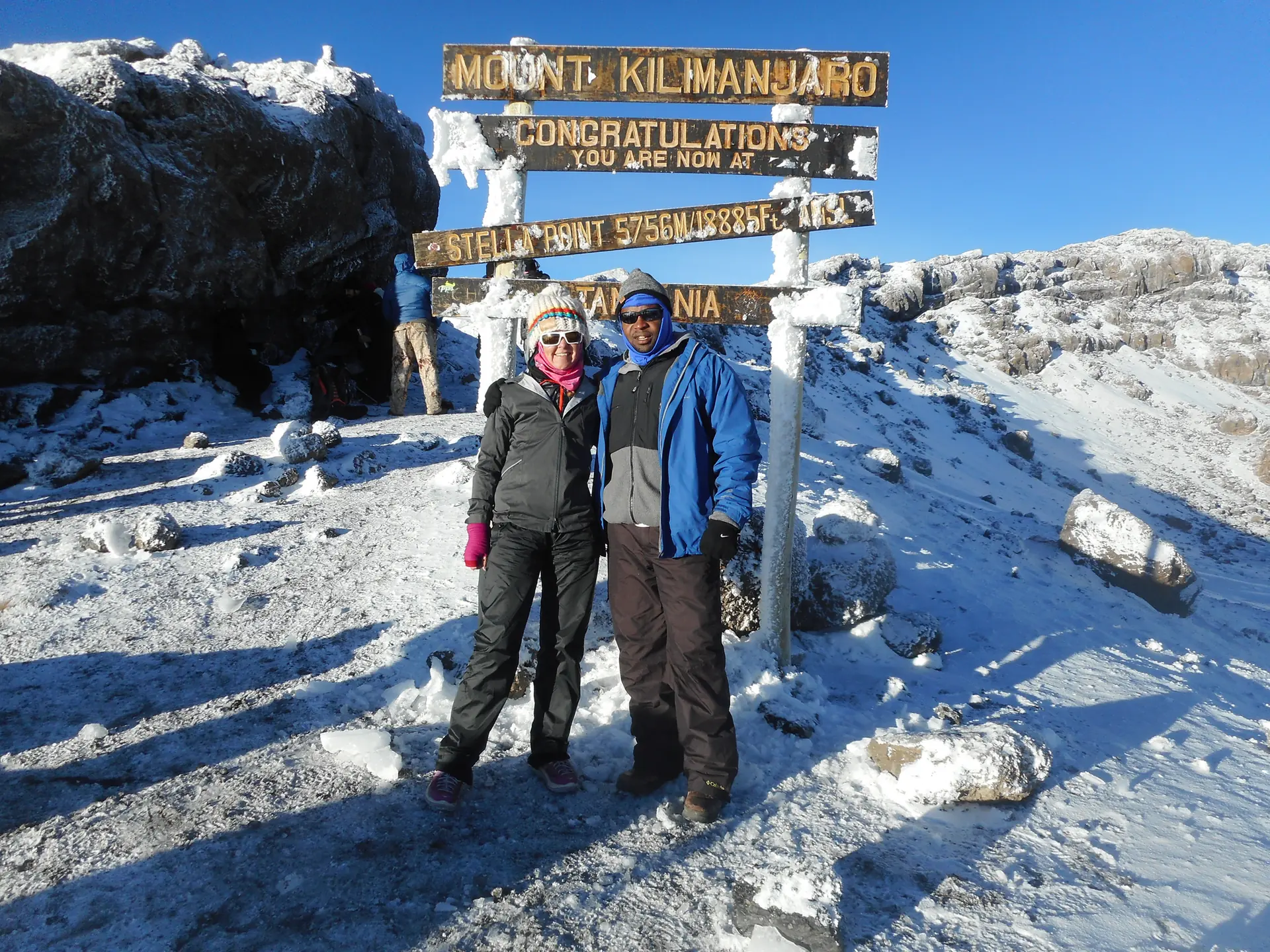
Today we climb very gradually towards the lunar desert of the Saddle between Mawenzi and Kibo. These 6-7 hours walking will be taken at a slow pace until we reach Kibo Hut (4,700m), where we will spend the night in a comfortable hut.
There is no running water at Kibo Hut. The remainder of the day is spent relaxing in preparation for the final ascent before a very early night. Horombo Hut to Kibo Hut (4,700 m.); 4-6 hours walking.
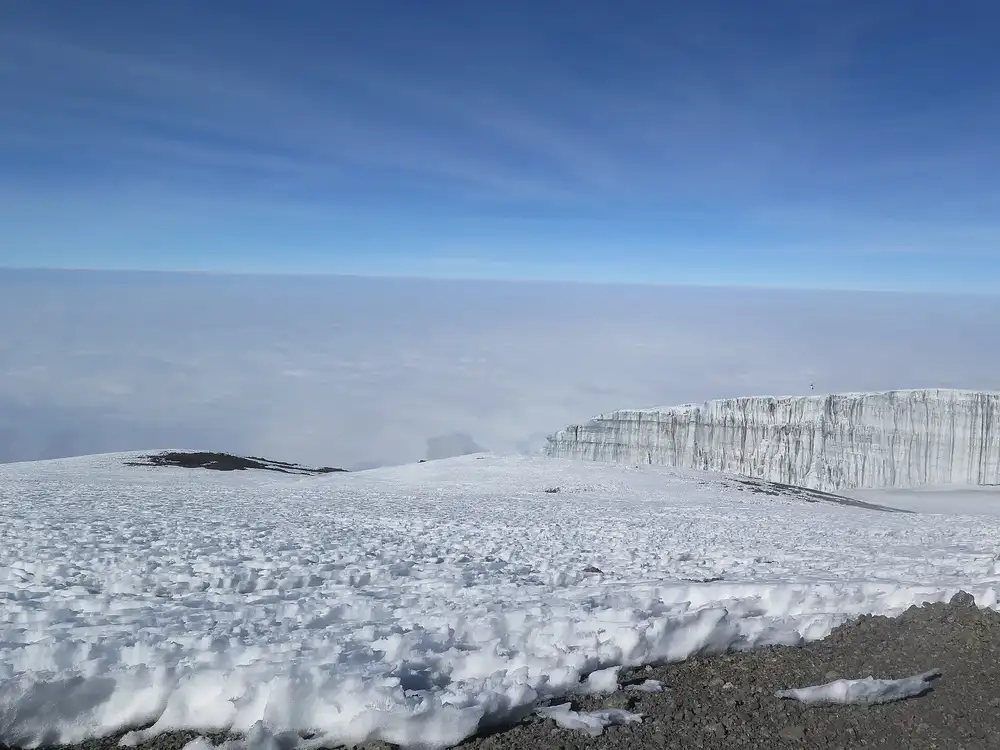
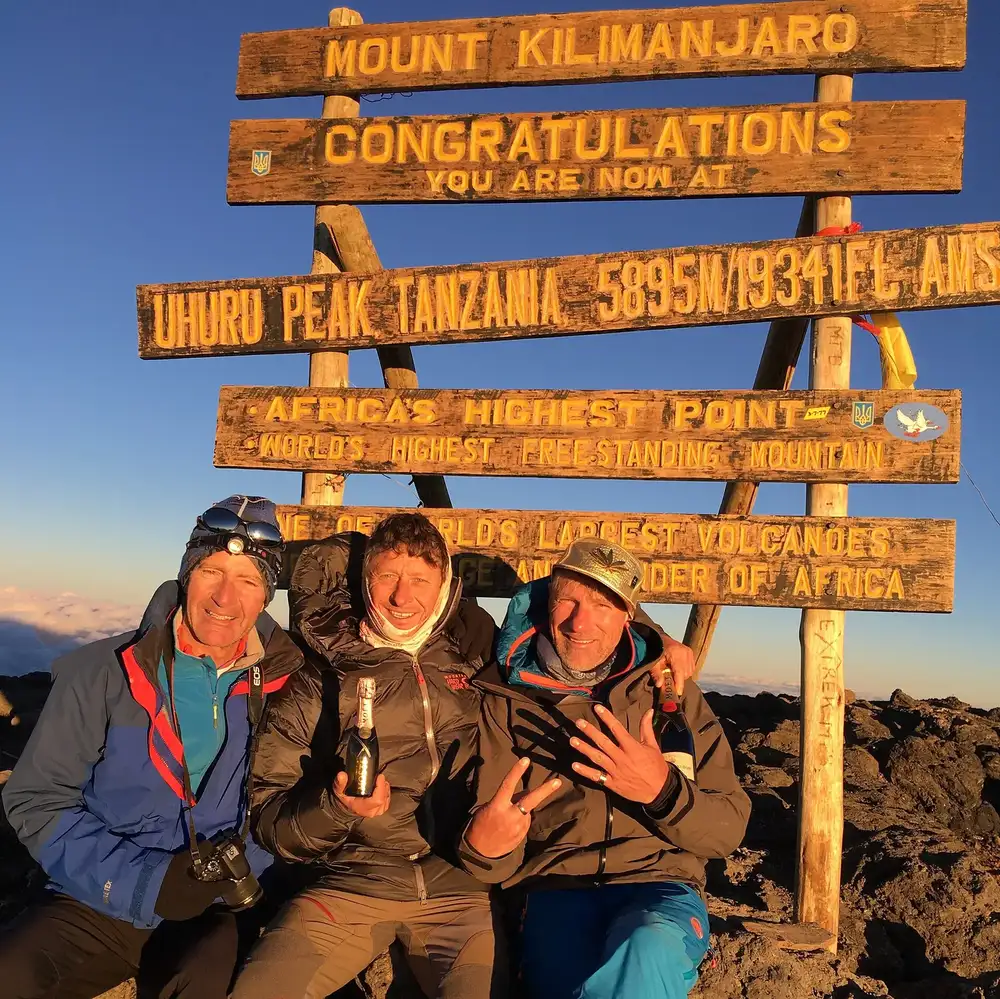
Wake up before midnight in the cover of darkness. We begin a steep climb over loose volcanic scree has some well-graded zig-zags and a slow but steady pace will take us to rim of the main crater, Gillman’s 5,685 m. We will rest there for few minutes to enjoy the sunrise over Mawenzi. Those who are still feeling good can continue slowly to make the three hour round trip from here along the crater rim to Uhuru peak 5,895 m. which is the highest point in Africa. After a few minutes to appreciate your accomplishment we descend to Kiko Hut is amazingly fast, and we stop at Kibo Hut for some refreshment, we continue to descend to reach Horrombo Hut. Kibo Hut to Summit to Horombo Hut (3,720 m): 13-15 hours walking.
Today we will descend past Mandara hut to Marangu National Park, successful climbers will receive their summit certificates. From here you will be transferred to Kilimanjaro Mountain Resort for dinner and overnight. Horombo hut to Marangu Gate. (6-7 hours walking).
After the thrills and excitement of your Trip, you will say goodbye to our team, then you need a Private departure transfer which is included from Marangu to Kilimanjaro International Airport (JRO) for your flight, unless you have an option to have Safari or any other option we will discuss, Don’t forget to come buck.
E-mail us at any time to discuss your trip and get the accurate quotation. Trekking Kilimanjaro for Charity Challenge? The above climb can be undertaken for your own personal charity or group charity.
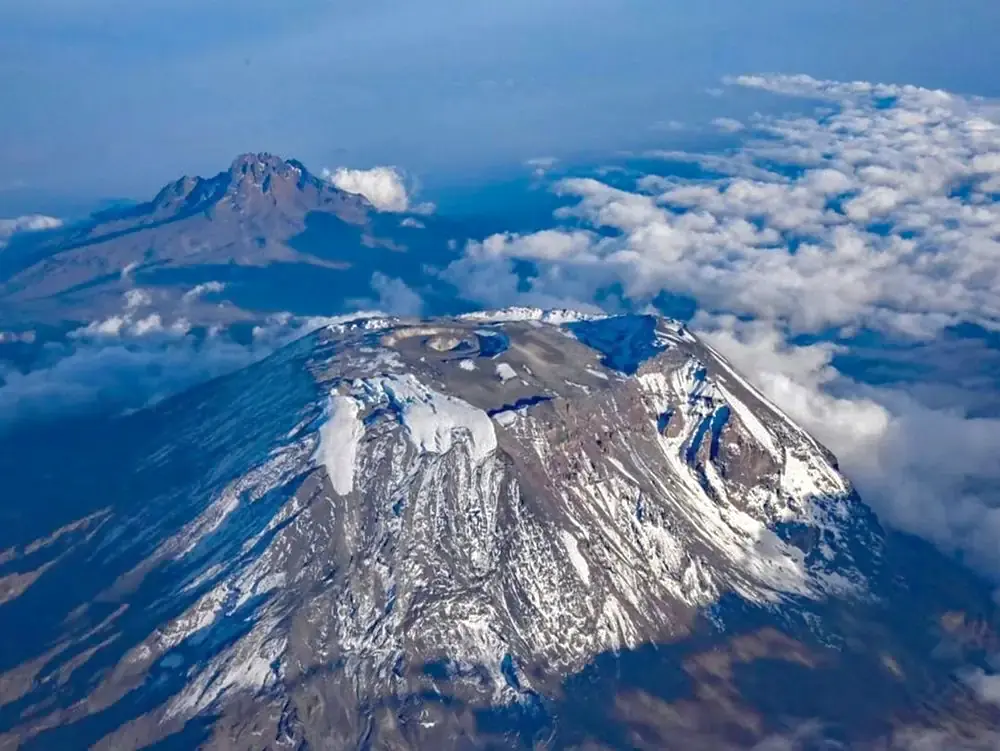
Success is what we want during our trip. We are prepared for any urgent situation and also have in place a complete evacuation procedure in case of altitude sickness. We carry first aid supplies, supplement summit oxygen and Pulse Oximeters).
all customers travelling with Top Travel Safaris Tanzania Adventure are required to have fully comprehensive travel insurance.
The policy needs to be valid from the date that the initial order is placed so as to provide cover for a cancellation prior to departure.
During travel the insurance needs to provide comprehensive medical, evacuation and repatriation cover.