

7joursTreks du Kilimandjaro
Trek de 7 jours au Kilimandjaro, voie Machame
Porte de Machame · Shira · Barranco · Barafu · Uhuru Peak · Porte de MwekaHébergement: Camping en montagne
Prix sur demande
Voir l'itinéraire
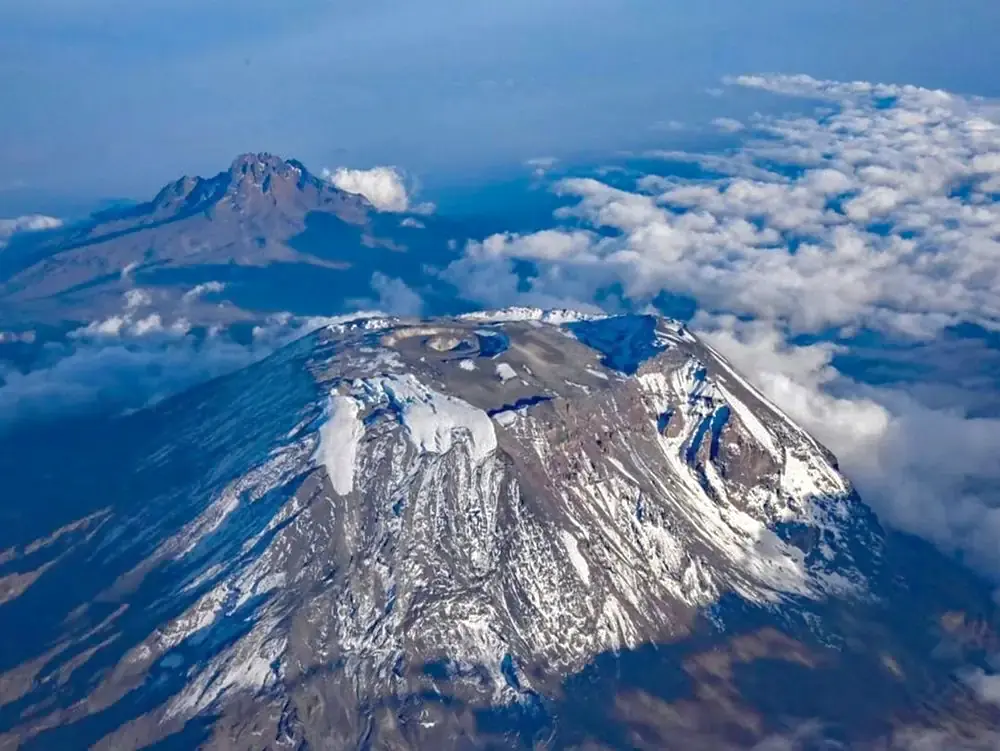
Un départ tranquille par l'ouest à travers une forêt tropicale isolée, puis la traversée du plateau de Shira vers les glaciers du sud et le sommet. Une voie superbe qui laisse le temps de s'acclimater.
Considérée comme l'une des plus belles voies du Kilimandjaro.
Chaque itinéraire peut être personnalisé, avec un hébergement économique, de milieu de gamme ou de luxe.

Jour 1
Enregistrement à la porte de Londorossi, route à travers les cultures jusqu'au départ de Lemosho, puis sentier facile en forêt jusqu'au camp.
Jour 2
On quitte la forêt pour la lande aux bruyères géantes et on monte régulièrement jusqu'au bord du plateau de Shira, puis on en traverse une partie jusqu'au camp.
Jour 3
Une montée le matin jusqu'au déjeuner près de la bifurcation de Lava Tower, puis descente au fond de la vallée du Grand Barranco, un camp abrité par des falaises.
Jour 4
Montée du raide mur de Barranco, puis le long du flanc sud-est du Kibo avec vue sur les glaciers du sud jusqu'à Karanga, dernier point d'eau avant le sommet.
Jour 5
Un chemin facile sur éboulis tassés jusqu'à Barafu, avec une courte marche d'acclimatation jusqu'à 4 800 m. Repos tôt avant le sommet.
Jour 6
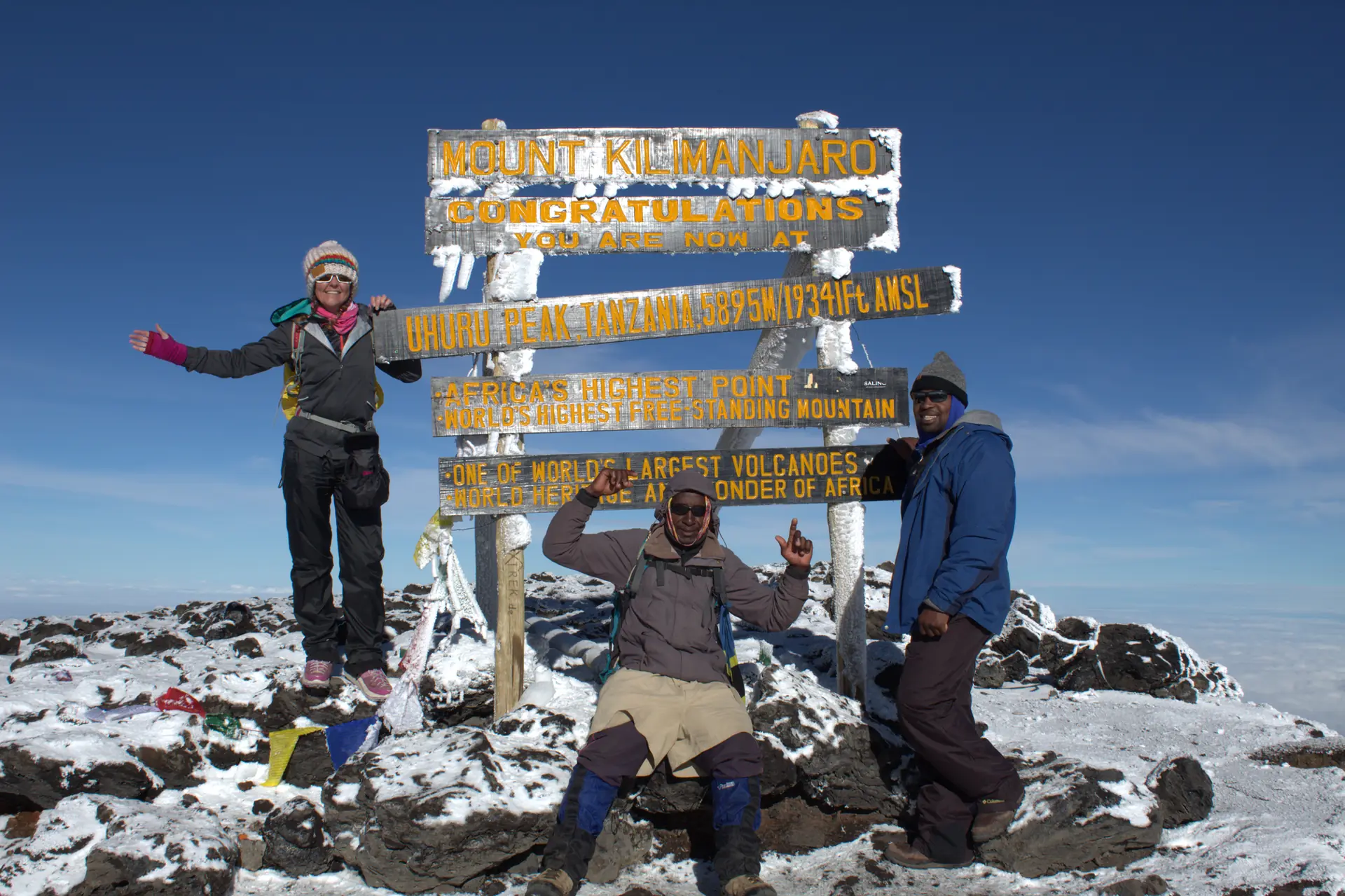
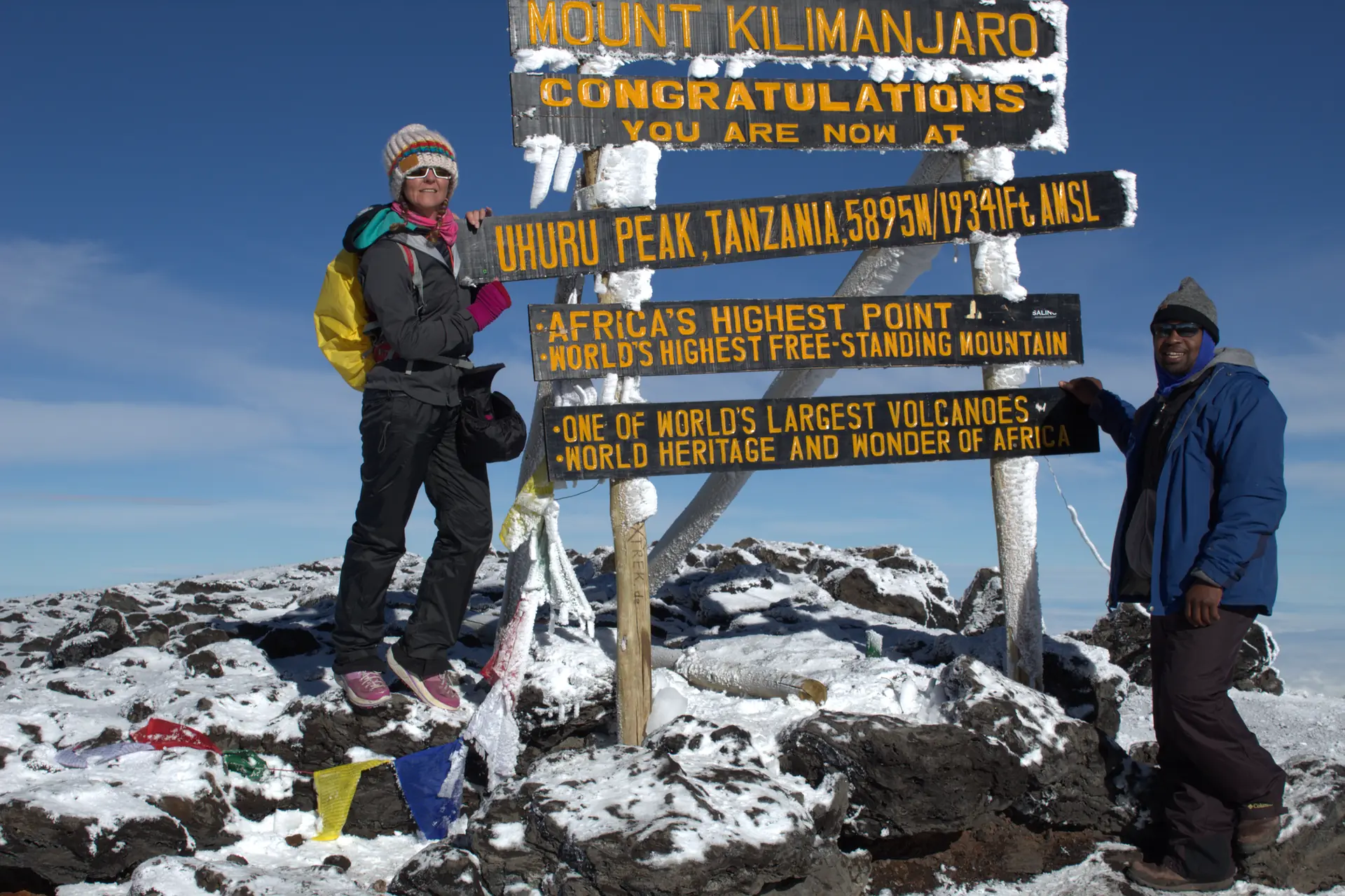
Départ vers 1 h à la frontale pour atteindre Stella Point (5 735 m) au lever du soleil, puis Uhuru Peak si vous vous sentez fort. Descente jusqu'à Millennium Camp.
Jour 7
Longue descente en forêt jusqu'à la porte de Mweka, puis à travers les plantations de café et de bananiers jusqu'au village de Mweka.
Les prestations incluses et non incluses sont confirmées dans votre devis écrit.
Nous n'affichons que des avis authentiques et vérifiables, issus des plateformes où nos voyageurs les ont rédigés.
Non. Le Kilimandjaro est une randonnée, pas une escalade technique, et ne demande ni équipement spécial ni compétences d'alpinisme. En revanche, vous devez être en forme.
Sur la voie Machame en sept jours, plus de 95 % de nos participants atteignent le sommet, grâce au jour d'acclimatation supplémentaire et à une préparation soignée. Les taux de réussite sont plus faibles sur les voies plus courtes.
Oui. Une assurance voyage et médicale complète est obligatoire pour l'ascension.
Non. Les pourboires pour les guides, les porteurs et le cuisinier sont d'usage et ne sont pas compris dans le prix.
Oui. C'est une combinaison très appréciée, et nous organisons l'ensemble du voyage pour vous. Consultez nos pages Safari + Kilimandjaro et Safari + Zanzibar.
Dites-nous ce que vous avez en tête, nous répondrons avec des conseils honnêtes et un devis sur mesure.
L'acompte, les moyens de paiement, l'annulation et les remboursements sont détaillés dans nos conditions de réservation. Lire les conditions de réservation
Hébergement: Camping en montagne
Prix sur demande
Voir l'itinéraireHébergement: Refuges de montagne
Prix sur demande
Voir l'itinéraireHébergement: Camps de montagne, puis lodges
Prix sur demande
Voir l'itinéraireHébergement: Hôtel et lodge sur le rebord du cratère
Prix sur demande
Voir l'itinéraireHébergement: Lodge ou camp, selon le devis
Prix sur demande
Voir l'itinéraireHébergement: Lodges et camps de tentes
Prix sur demande
Voir l'itinéraireCe texte est disponible en anglais uniquement.

This is regarded as one of the prettiest route on Kilimanjaro. We begin trekking in the thick, fertile rainforest until we reach the wildflowers and shrubs of the heath ecosystem. Approaching from the west, we cross one of most beautiful areas on Kilimanjaro, the vast Shira Plateau, before traversing the mountain along the southern circuit. The Lemosho route is for those with previous backpacking experience.

After completing the necessary registration formalities at Londorossi National Park gate, we drive through varied farmland with open views over the plains to reach the Lemosho road head. The last section of the road is of poor quality and difficult to drive after rain, sometimes we start walking a kilometer or two below the road head. We often have our lunch at the road head before starting to walk. It is an easy day of walking up a small path through beautiful and lush forest. We camp at Lemosho Big Tree C amp (2,650 m); [2-3 hours walking]
We soon leave the forest behind and enter the moorland zone of giant heather. The trail climbs steadily with wide views to reach the rim of the Shira Plateau . There is a tangible sense of wilderness, especially if afternoon mists come in! We walk part way across the plateau to Shira One Camp (3,550 m) [6-8 hours walking]
A morning of sustained ascent and panoramic views brings us to lunch near the Lava Tower junction (4,550 m.). The trail then descends to the bottom of the Great Barranco valley (3,900 m); another spectacular campsite sheltered by towering cliffs and with extensive views of the plains far below. [7-9 hours walking]
A steep climb up the Barranco Wall leads us to an undulating trail on the south-eastern flank of Kibo, with superb vistas of the Southern Icefields. The terrain changes to scree, with pockets of lush vegetation in sheltered hollows, and there is only a short distance to our camp at Karanga (4,000 m), the last water point on the way to the summit. [4-5 hours walking]
We follow an easy path on compacted scree with wide views that gains altitude unrelentingly to reach the Barafu campsite (4,600 m) for lunch. There is a short acclimatization walk to the plateau at the bottom of the South-East valley (4,800 m). The remainder of the day is spent resting in preparation for the final ascent before a very early night. [3-5 hours walking]
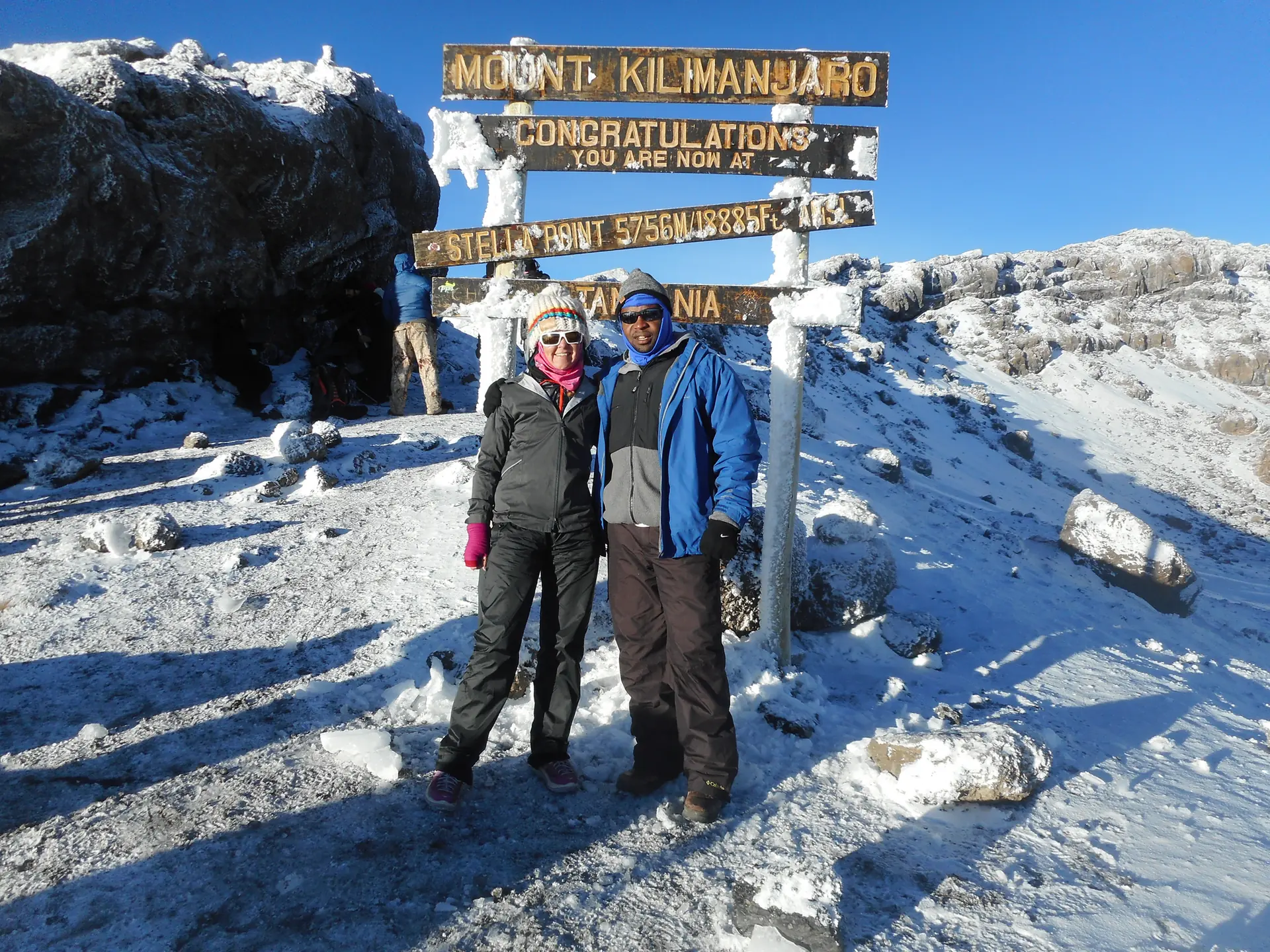
We will start our ascent by torchlight at about 1 a.m. so that we can be up on the Crater rim by sunrise. The steep climb over loose volcanic scree has some well-graded zig-zags and a slow but steady pace will take us to Stella Point (5,735 m), in about five or six hours. We will rest there for a short time to enjoy the sunrise over Mawenzi. Those who are still feeling strong can make the two hour round trip from here along the crater rim to Uhuru Peak (5,896 m), passing close to the spectacular glaciers and ice cliffs that still occupy most of the summit area. The descent to Barafu is surprisingly fast, and after some refreshment, we continue to descend to reach Millennium Camp (3,800 m). [10-15 hours walking]
A sustained descent through lovely forest with lush undergrowth takes us to the National Park gate at Mweka (1,650 m); and on through coffee and banana farms to Mweka village. [4-6 hours walking]