


15дн.Комбинированные туры
Комбинированный тур на 15 дней по северу Танзании
Аруша · Тарангире · Серенгети · Нгоронгоро · Озеро Эяси · Озеро Маньяра · АрушаРазмещение: Лоджи и палаточные лагеря
Цена по запросу
Смотреть маршрут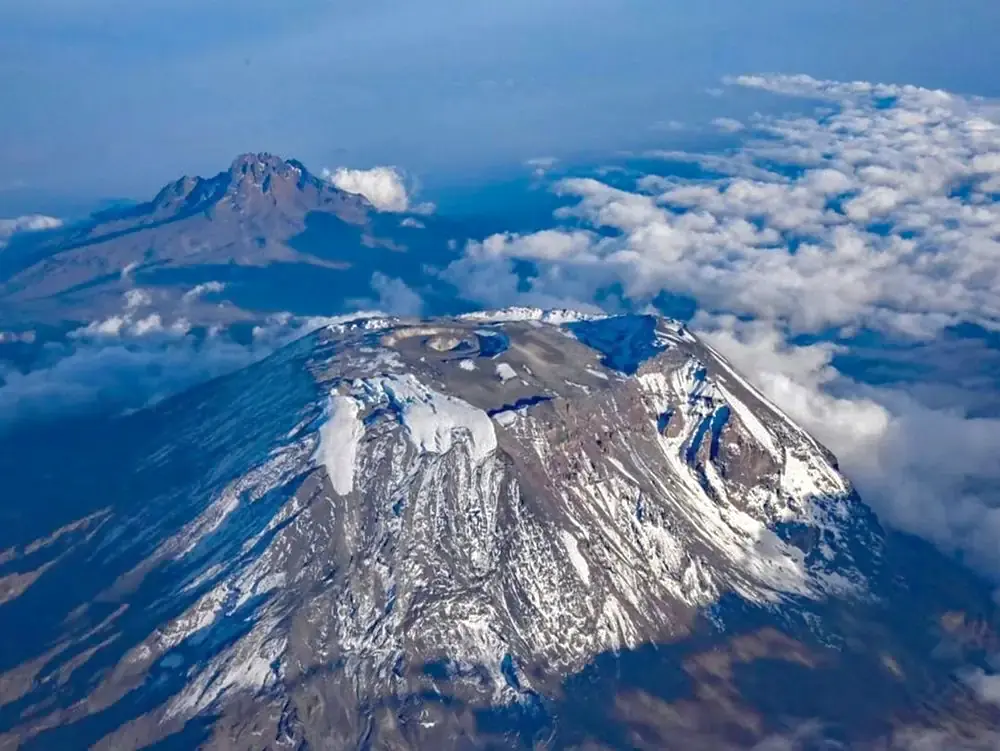
Поднимитесь на высочайшую гору Африки, а затем дайте ногам отдохнуть на сафари в Тарангире, Серенгети и кратере Нгоронгоро. Одна поездка, которую планирует и проводит одна команда.
Восхождение на Килиманджаро по маршруту Ронгаи, единственному с северной стороны, затем сафари в Серенгети.
Любой маршрут можно изменить, с размещением экономкласса, среднего или высокого уровня.
День прибытия
Встреча в аэропорту Килиманджаро и трансфер в отель в Моши или Аруше. В 17:30 инструктаж перед восхождением и проверка снаряжения, а также проверка медицинской страховки.
Ночь 1 Ночёвка (или аналогичная)


День 1
Дорога к воротам Ронгаи у границы с Кенией, затем пешком через лес до края вересковой зоны с видом на равнину. Полдня пути.
День 2
Равномерный подъём к Second Cave, затем через вересковую зону к зубчатым пикам Мавензи.
День 3
Короткий крутой подъём по травянистым склонам к лагерю под шпилями Мавензи. Вторая половина дня свободна для отдыха и акклиматизации.
День 4
Переход через лунную пустыню седловины между Мавензи и Кибо, затем отдых перед штурмом вершины.
День 5
Выход около 1 часа ночи с налобными фонарями к Gillman's Point на рассвете, затем к пику Ухуру, если хватает сил. Спуск к Kibo Hut на обед и дальше к Horombo Hut.
День 6
Праздник с вашей командой, затем спуск к воротам Марангу за сертификатом: зелёный за Gillman's Point, золотой за пик Ухуру. Поездка в Арушу.
День 7
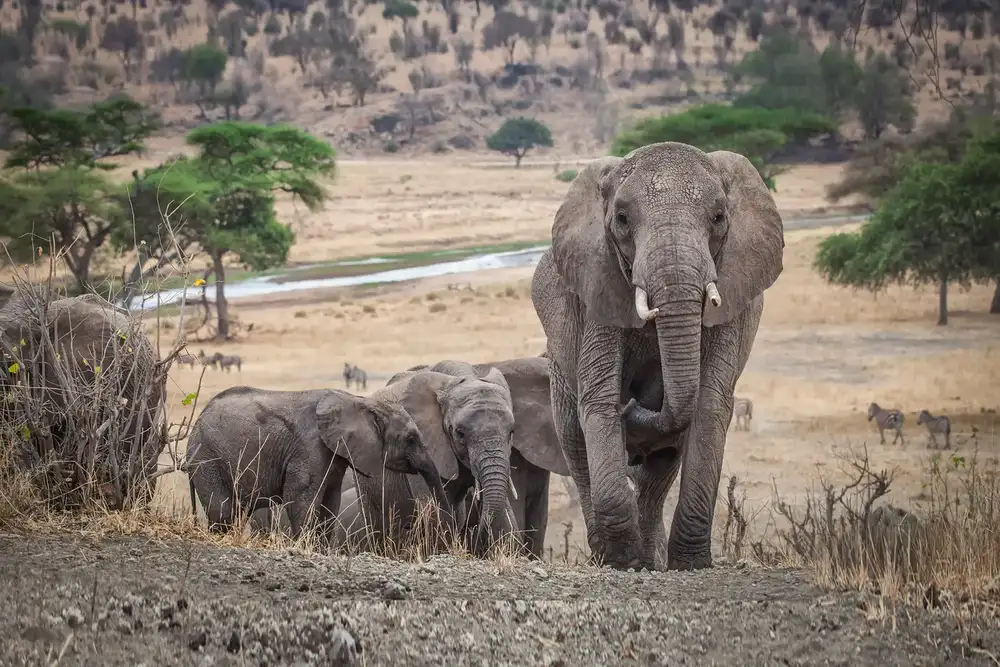
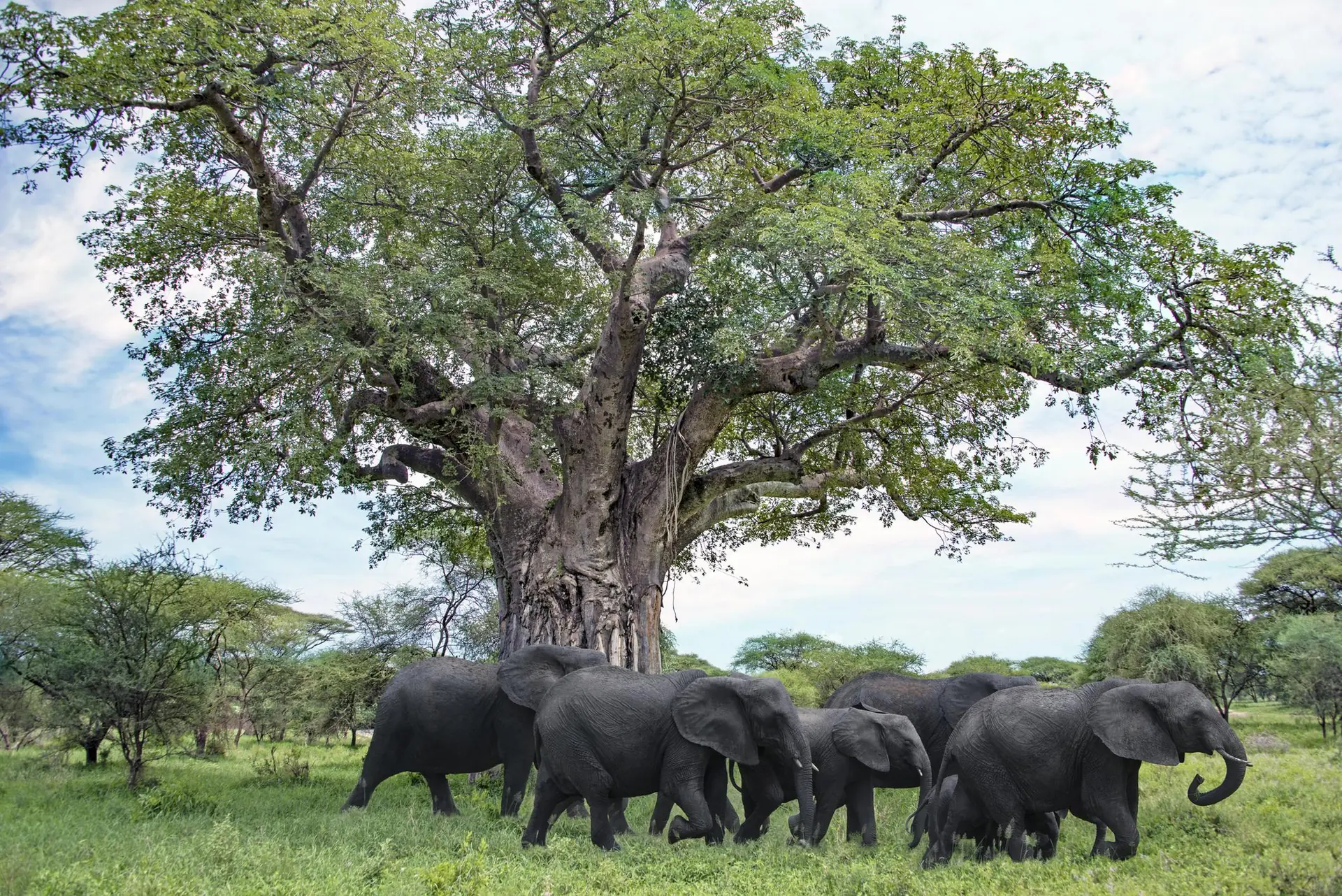
Поездка в Тарангире для наблюдения за животными вдоль постоянной реки Тарангире, одного из лучших мест для дикой природы в сухой сезон.
Ночь 2 Ночёвка (или аналогичная)
День 8
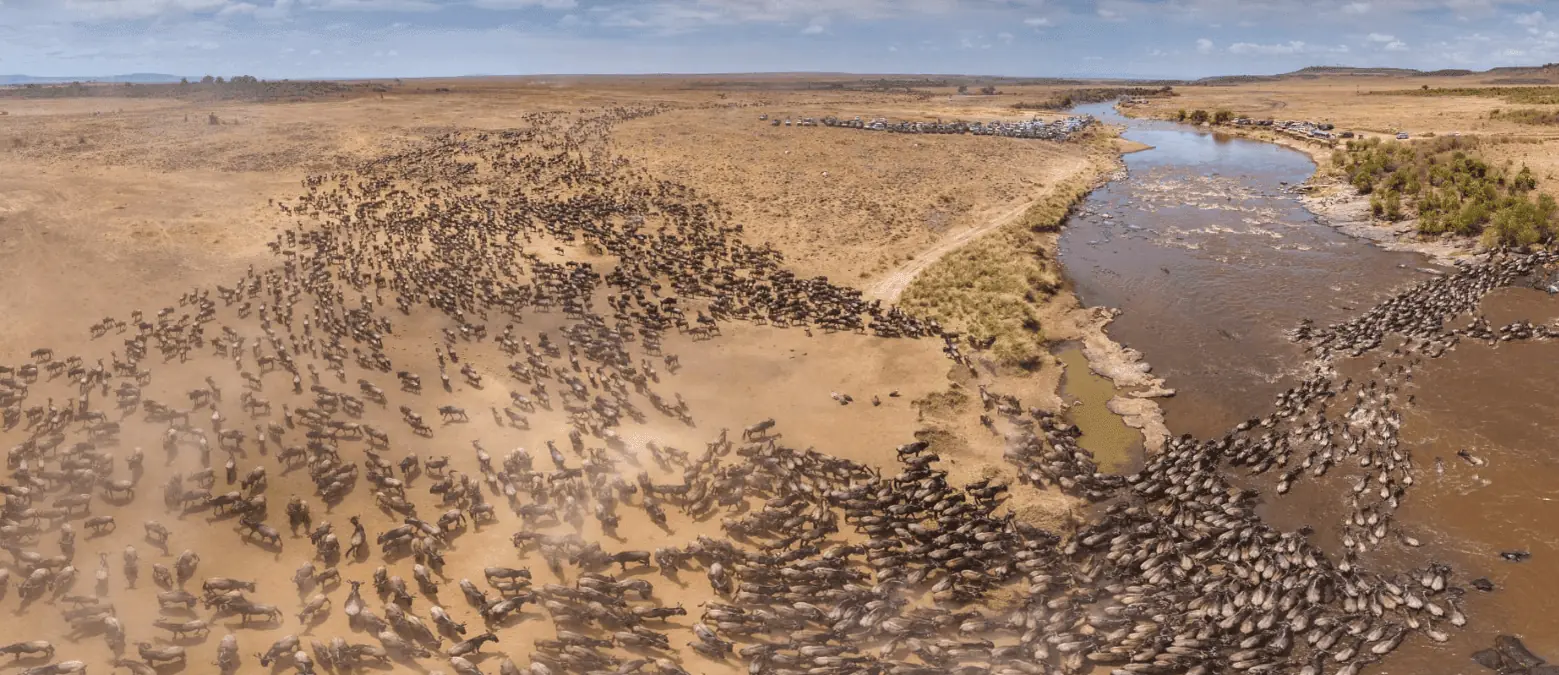
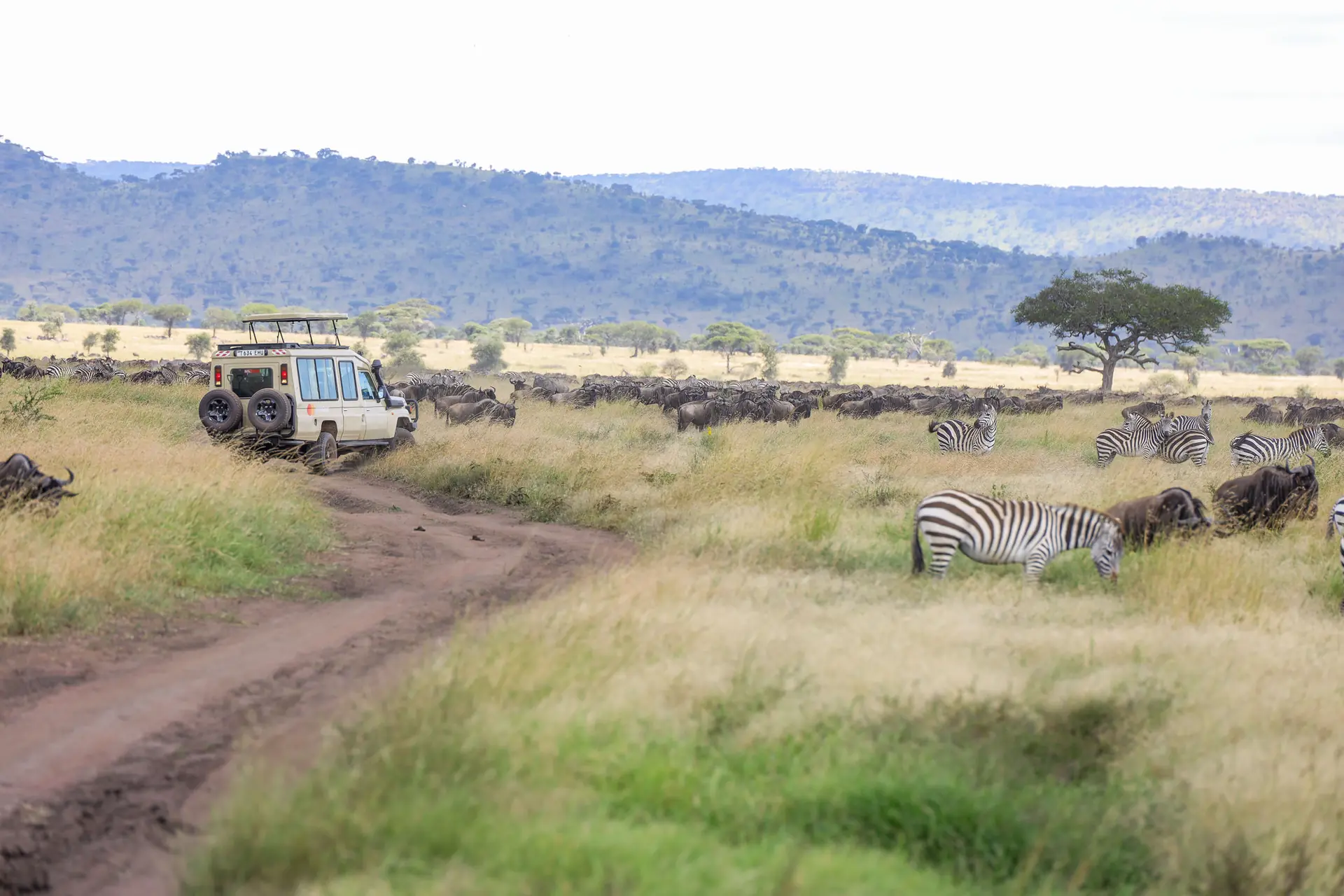
Музей в ущелье Олдувай, где Лики сделали важные открытия, затем сафари по равнинам Серенгети. С декабря по февраль обычно встречается миграция.
Ночь 3 Ночёвка (или аналогичная)
День 9
Ранний выезд, чтобы использовать день по максимуму: бегемотий пруд, львиные прайды, копье и травоядные равнин, а при удачном времени и стада мигрантов.
Ночь 4 Ночёвка (или аналогичная)
День 10
Раннее сафари, затем заповедная зона Нгоронгоро, где масаи пасут скот рядом с дикими животными. Виды с края кратера и первый спуск в кратер.
Ночь 5 Ночёвка (или аналогичная)

День 11
Спуск примерно на 600 метров и целый день сафари по лесу, берегу озера и открытой саванне с пикником на дне кратера.
Ночь 6 Ночёвка (или аналогичная)
День 12
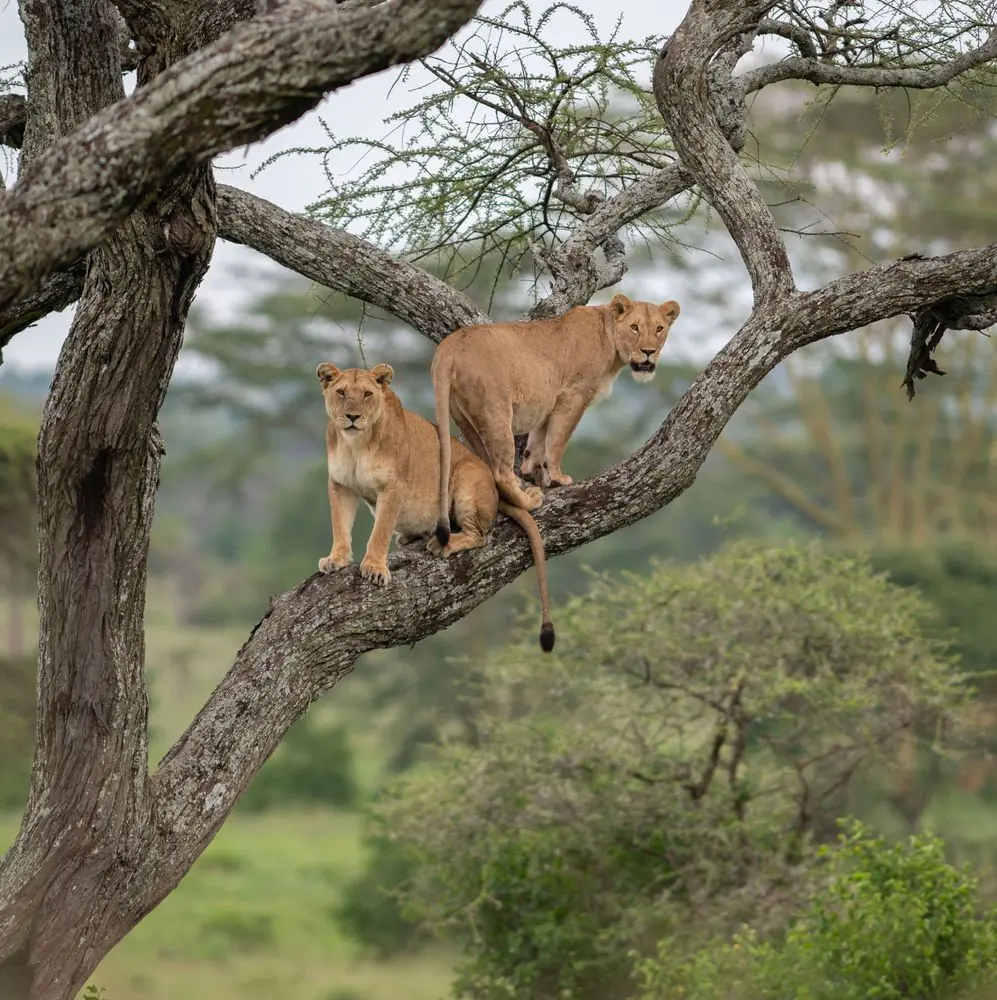
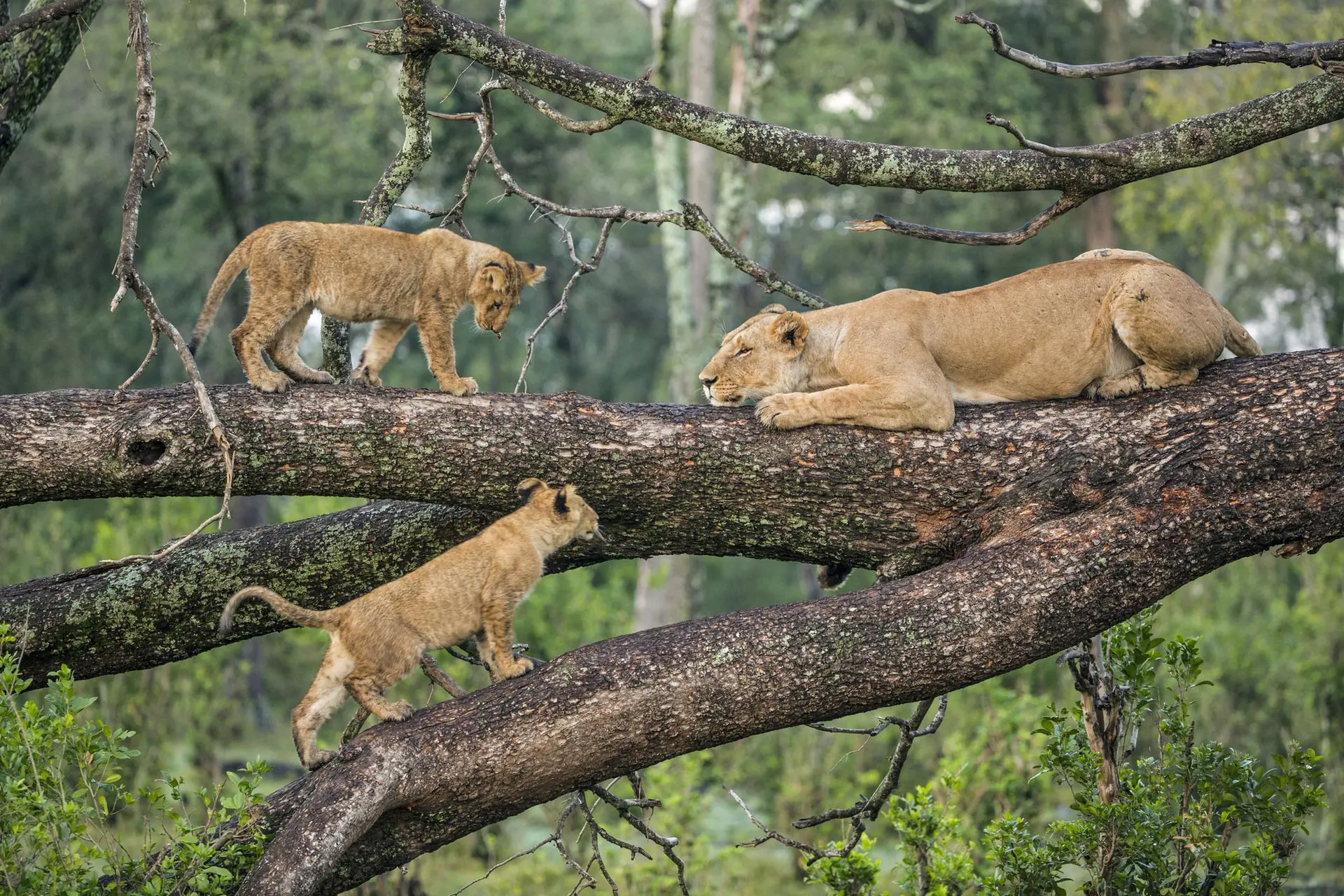
Сафари в национальном парке Озеро Маньяра: более 350 видов птиц и львы, лазающие по деревьям, затем прямо в аэропорт Килиманджаро к вечернему рейсу.
Гора Килиманджаро
Тип номера: Подтверждается в вашем расчёте
Питание: Подтверждается в вашем расчёте

Кратер Нгоронгоро
Тип номера: Подтверждается в вашем расчёте
Питание: Подтверждается в вашем расчёте
Национальный парк Серенгети
Тип номера: Подтверждается в вашем расчёте
Питание: Подтверждается в вашем расчёте
Кратер Нгоронгоро
Тип номера: Подтверждается в вашем расчёте
Питание: Подтверждается в вашем расчёте
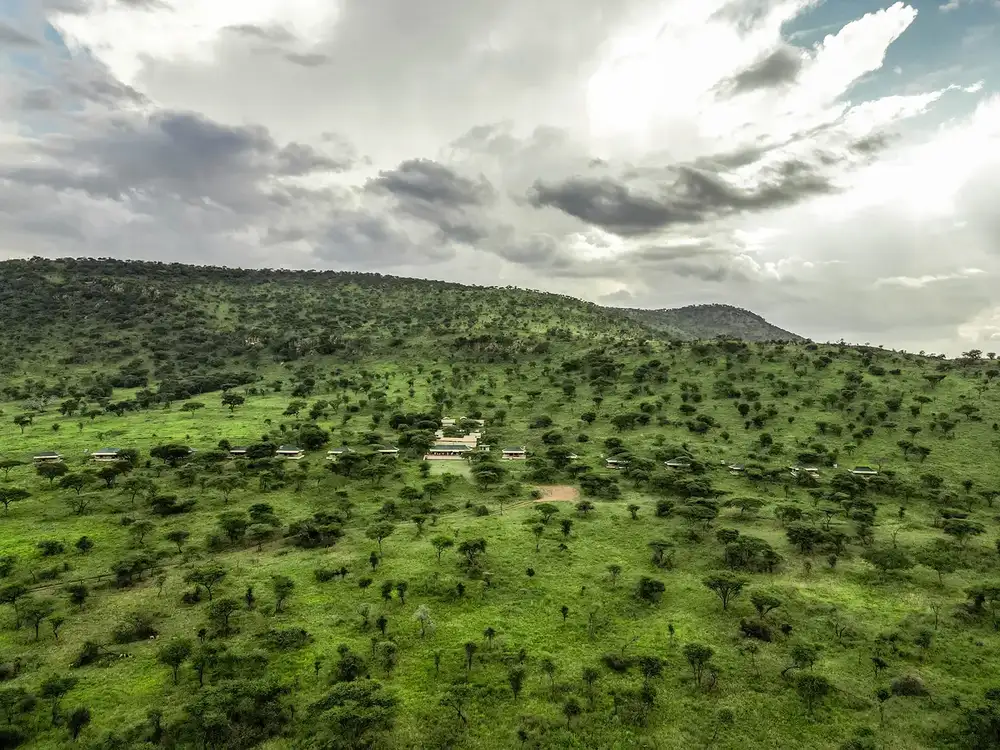
Лоджи и лагеря указаны с пометкой «или аналогичные». Фотографии показывают окрестности; точные номера указаны в вашем расчёте.
Мы показываем только настоящие, проверяемые отзывы с тех платформ, где их оставили гости.
Нет. Килиманджаро — это треккинг, а не технический подъём, специальное снаряжение и навыки скалолазания не требуются. Но физическая форма нужна.
На семидневном маршруте Мачаме более 95% наших участников добираются до вершины благодаря дополнительному дню на акклиматизацию и тщательному планированию. На более коротких маршрутах доля успешных восхождений ниже.
Да. Для восхождения обязательна полная страховка путешественника и медицинская страховка.
Нет. Чаевые проводникам, носильщикам и повару — это принятая практика, и они не включены в стоимость.
Да. Это популярное сочетание, и мы планируем всю поездку за вас. См. наши страницы «Сафари + Килиманджаро» и «Сафари + Занзибар».
Расскажите, что вы задумали, и мы ответим честным советом и индивидуальным расчётом.
Предоплата, способы оплаты, отмена и возврат средств описаны в наших условиях бронирования. Читать условия бронирования
Размещение: Лоджи и палаточные лагеря
Цена по запросу
Смотреть маршрутРазмещение: Лоджи и палаточные лагеря
Цена по запросу
Смотреть маршрутРазмещение: Лоджи и палаточные лагеря
Цена по запросу
Смотреть маршрутРазмещение: Отель и лодж на краю кратера
Цена по запросу
Смотреть маршрутРазмещение: Лодж или лагерь по расчёту
Цена по запросу
Смотреть маршрутРазмещение: Кемпинг в горах
Цена по запросу
Смотреть маршрутЭтот текст доступен только на английском языке.
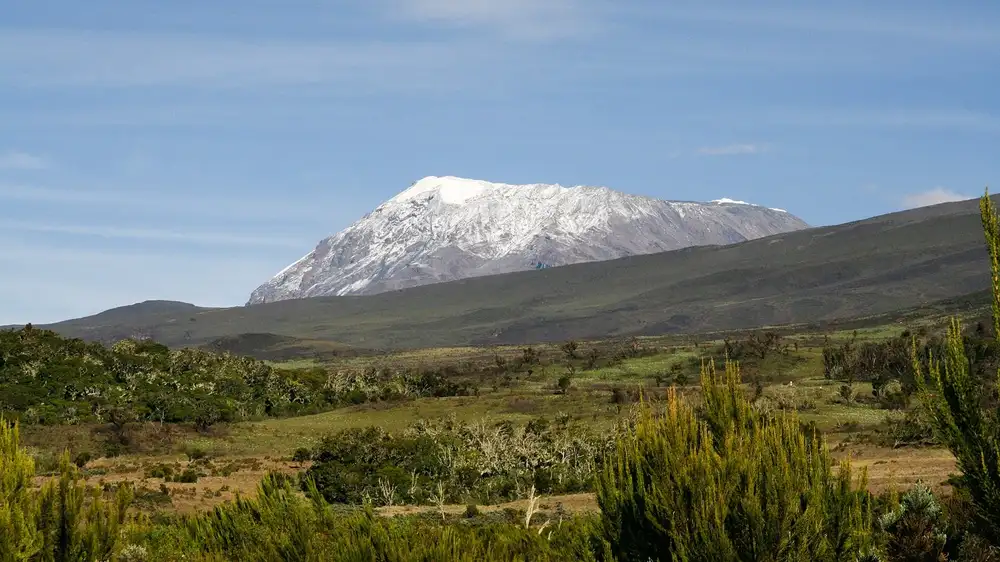
The Rongai route is the only route that approaches Kilimanjaro from the north, close to the border of Kenya and Tanzania . The Rongai Route is more scenic than the Marangu Route and easier than other camping route in climbing Kilimanjaro.
Though gaining popularity amongst climbers, this route still experiences low crowds, Rongai has a more gradual slope than the mountain’s other routes. It is the preferred route for those looking for an alternative to the popular Marangu route, for those who would like a more remote hike.
And for those who are climbing during the rainy season (the north side receives less precipitation). Rongai is a moderately difficult route, and is highly recommended, especially for those with less backpacking experience.
Met on arrival anytime at Kilimanjaro International Airport, transfer to Hotel in Arusha town or Moshi town. We stay at Kilimanjaro mountain resort in Moshi ,the hotel located at lower slop of Mt Kilimanjaro or Ilboru Safari Lodge in Arusha. The hotel olso located on the lower slopes of Mt Meru which is very beautiful Hotel, a perfect place to prepare for your adventure. We will gather in the evening at 5:30 pm for a pre-climb briefing and an equipment check. We will also confirm you have the appropriate mandatory medical coverage and travel insurance.
Dinner and overnight at Kilimanjaro Mountain Resort: Half board.
After an early breakfast in Marangu, you will drive to Rongai (Nalemoru) Gate near Kenya border. We begin our climb on this unspoilt wilderness route. The walk then starts to climb consistently, but gently through attractive forest that shelters a variety of wildlife. The forest begins to thin out and the first camp is at the edge of the moorland zone (2600 m.) with extensive views over the Kenyan plains. The first day is only a half-day walk. [3-4 hours walking]
The morning walk is a steady ascend up to the ‘Second Cave’ (3,450 m.) with superb views of Kibo and the Eastern icefields on the crater rim. After lunch, we leave the main trail and strike out across the moorland on a smaller path towards the jagged peaks of Mawenzi. Our “Upper Kikelewa” campsite is on a small plateau above a sheltered valley with giant senecios past Kikelewa Caves (3,750 m.) [7-8 hours walking]
A short but steep climb up grassy slopes is rewarded by superb all round views and a tangible sense of wilderness. We leave vegetation behind shortly before reaching the next camp at “Mawenzi” (4,300 m.), spectacularly situated beneath the towering spires of Mawenzi. The afternoon will be free to rest or explore the surrounding area as an aid to acclimatisation. [3-4 hours walking]
We cross the lunar desert of the saddle between Mawenzi and Kibo to reach Kibo Hut (15,400 ft) at the bottom of the crater wall. The remainder of the day is spent resting in preparation for an early morning final ascent. [5-6 hours walking]
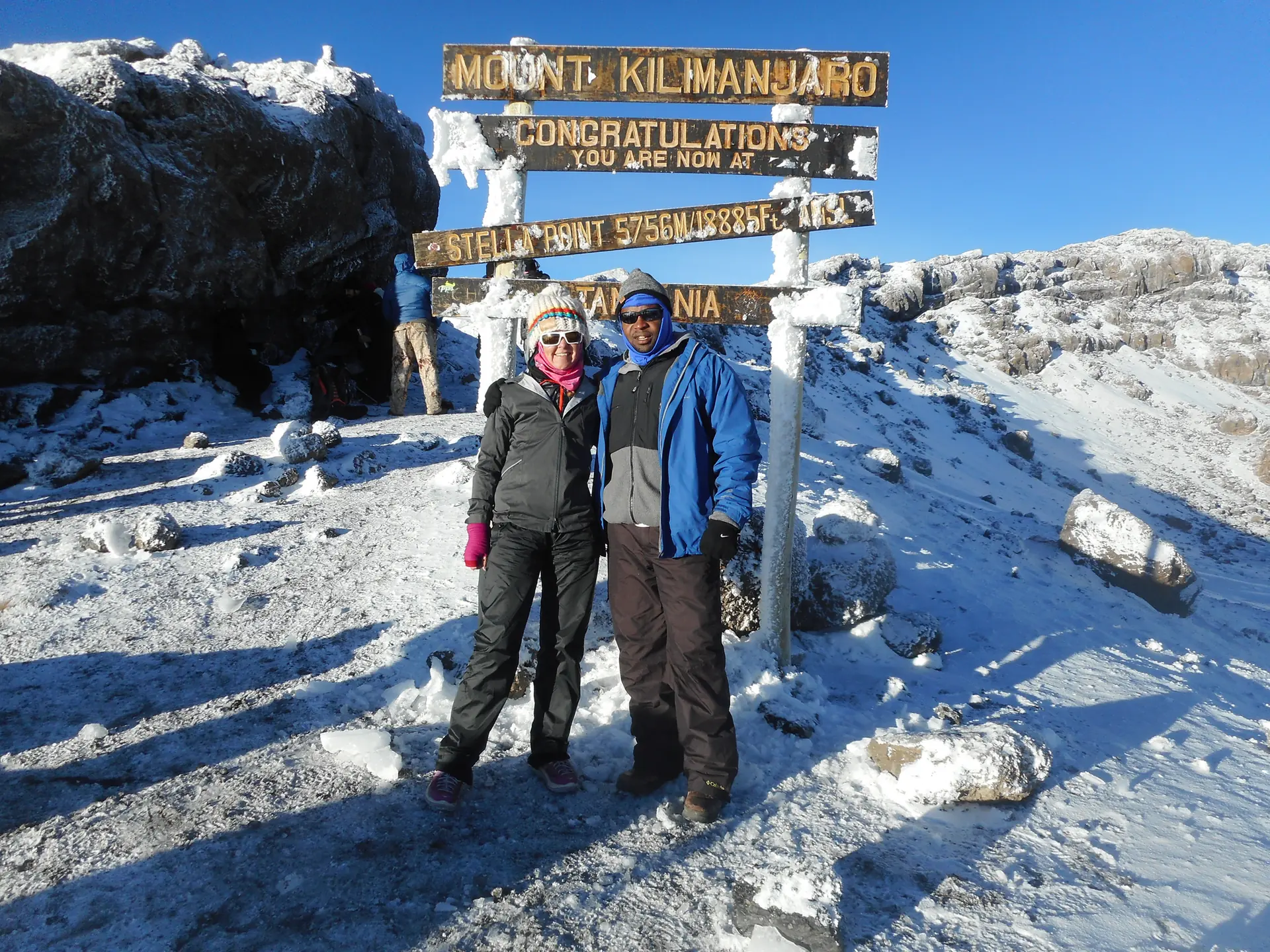
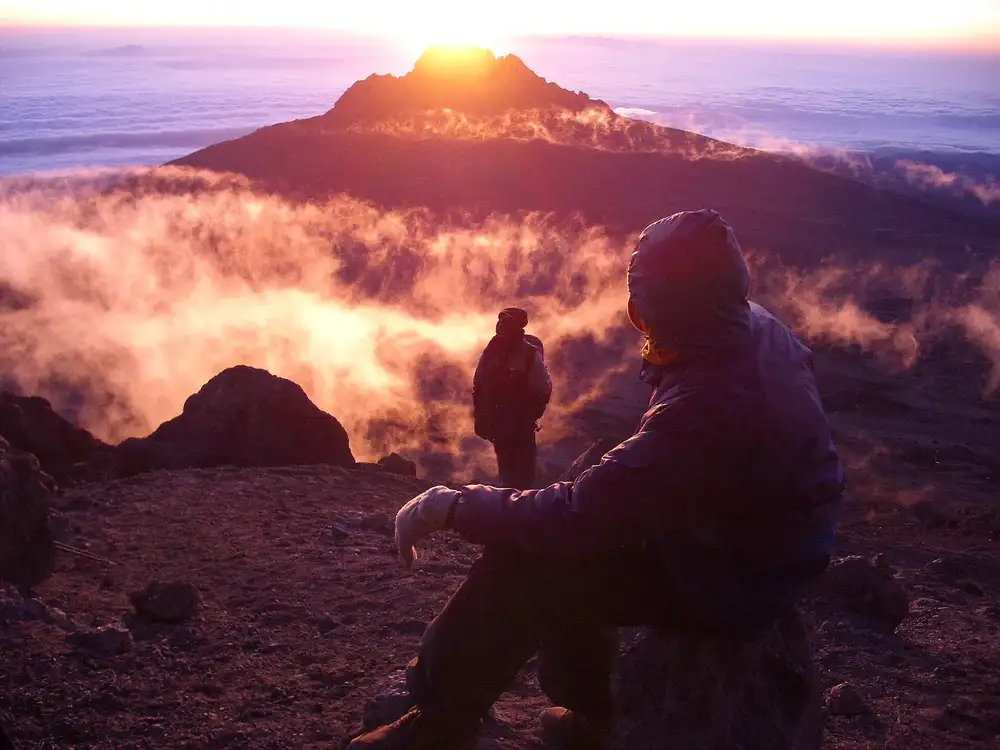
We start the final and most demanding part of the climb by torchlight around 1 a.m. We plod very slowly in the darkness on a switchback trail through loose volcanic scree to reach the crater rim at Gillman’s Point (18,600 ft) Reaching this section is an impressive achievement as the trail is steep, rocky, and at high altitude. We rest here for a short time to enjoy the spectacular sunrise over Mawenzi.
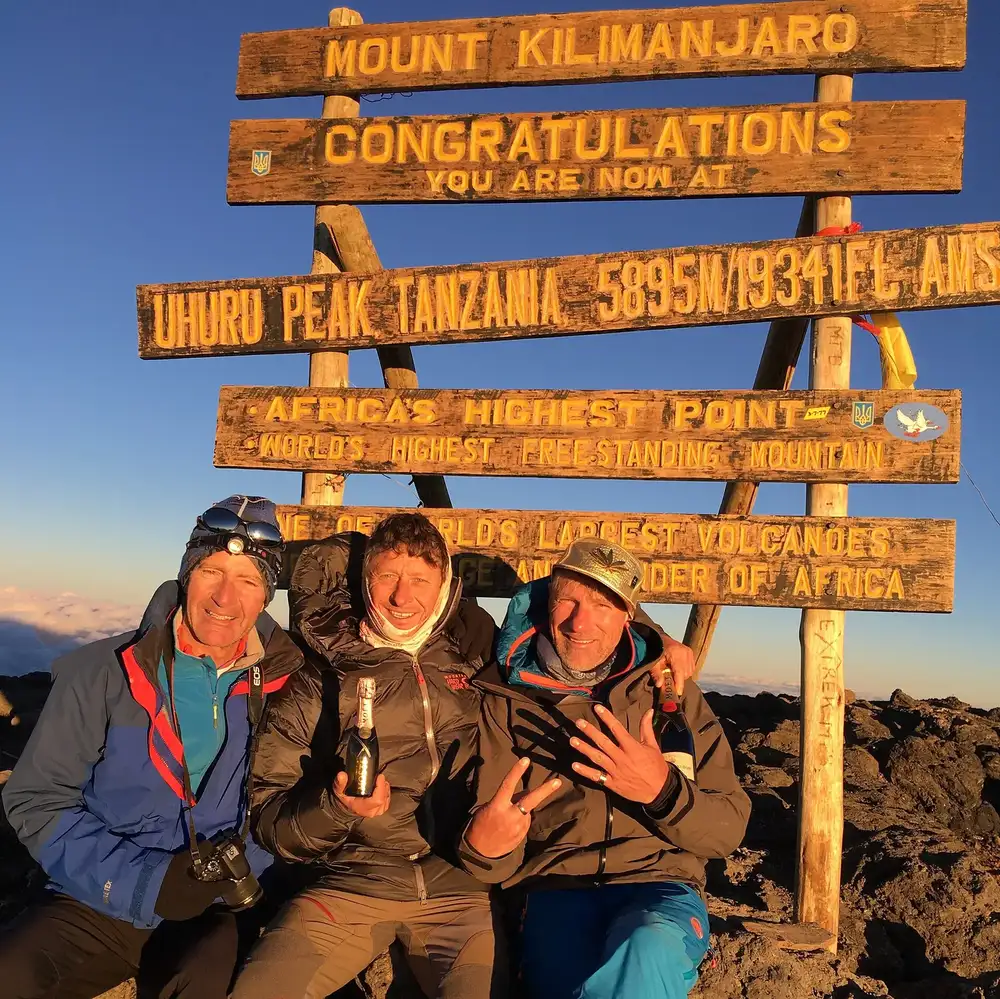
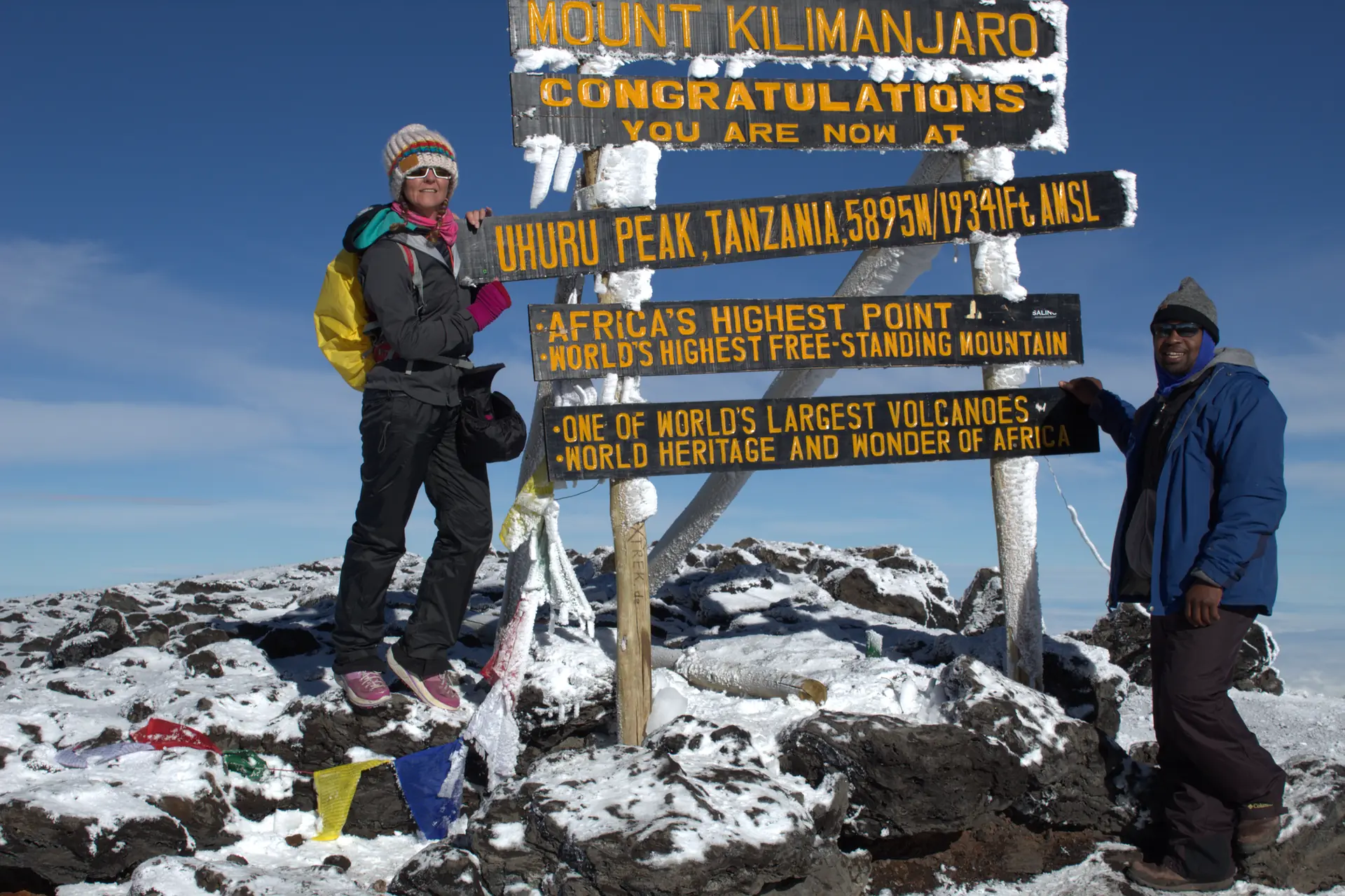
Those who are still feeling strong can make the three-hour round trip to Uhuru Peak (19,345 ft) Reaching the summit of Mt. Kilimanjaro is a lifetime accomplishment! You will be able to spend a short time on the summit taking photographs accompany with cup tee . The descent to Kibo Hut (15,400 ft) is surprisingly fast, The hike down to Kibo Hut takes about 3 hours.
At Kibo Hut, you will rest and enjoy a hot lunch in the sun. After eating, you will continue descending down to Horombo Hut (3720m-12,200 ft). You will have a dinner, wash, and rest soundly at the hut after a strenuous day.
Following a well-deserved breakfast, your staff will have a big celebration full of dancing and singing. It is here on the mountain that you will present your tips to the guide, assistant guides, chef(s), and porters. After celebrating, you will descend for 6 hours back to Marangu Gate (1980m).
The National Park requires all hikers to sign their names to receive certificates of completion. Hikers who reached Gillman’s Point (5681m) receive green certificates and hikers who reached Uhuru Peak (5895m) receive gold certificates. After receiving certificates, you will drive back to Arusha for long overdue showers and more celebrations.
Today we drive to Tarangire National Park, for excellent game viewing. Tarangire is a small park which offers some excellent sights. Generally in the dry seasons Tarangire comes alive as wildlife and birdlife congregate on the Tarangire River, which is a permanent source of water. We spend the night in our lodge beautifully set inside the park with stunning views and a unique atmosphere. In the late afternoon we make a short journey from the park to our special lodge.
Dinner and overnight at Eileen’s Tree Lodge: Full board .
We head towards the Serengeti National Park. En route there is an opportunity to visit Olduvai Gorge. It is within this steep sided ravine that Louis and Mary Leakey made some of the world’s most important archaeological discoveries in the 1950s. Here in a small museum we are able to see evidence of our ancestors that have been dated back 2.5 million years.
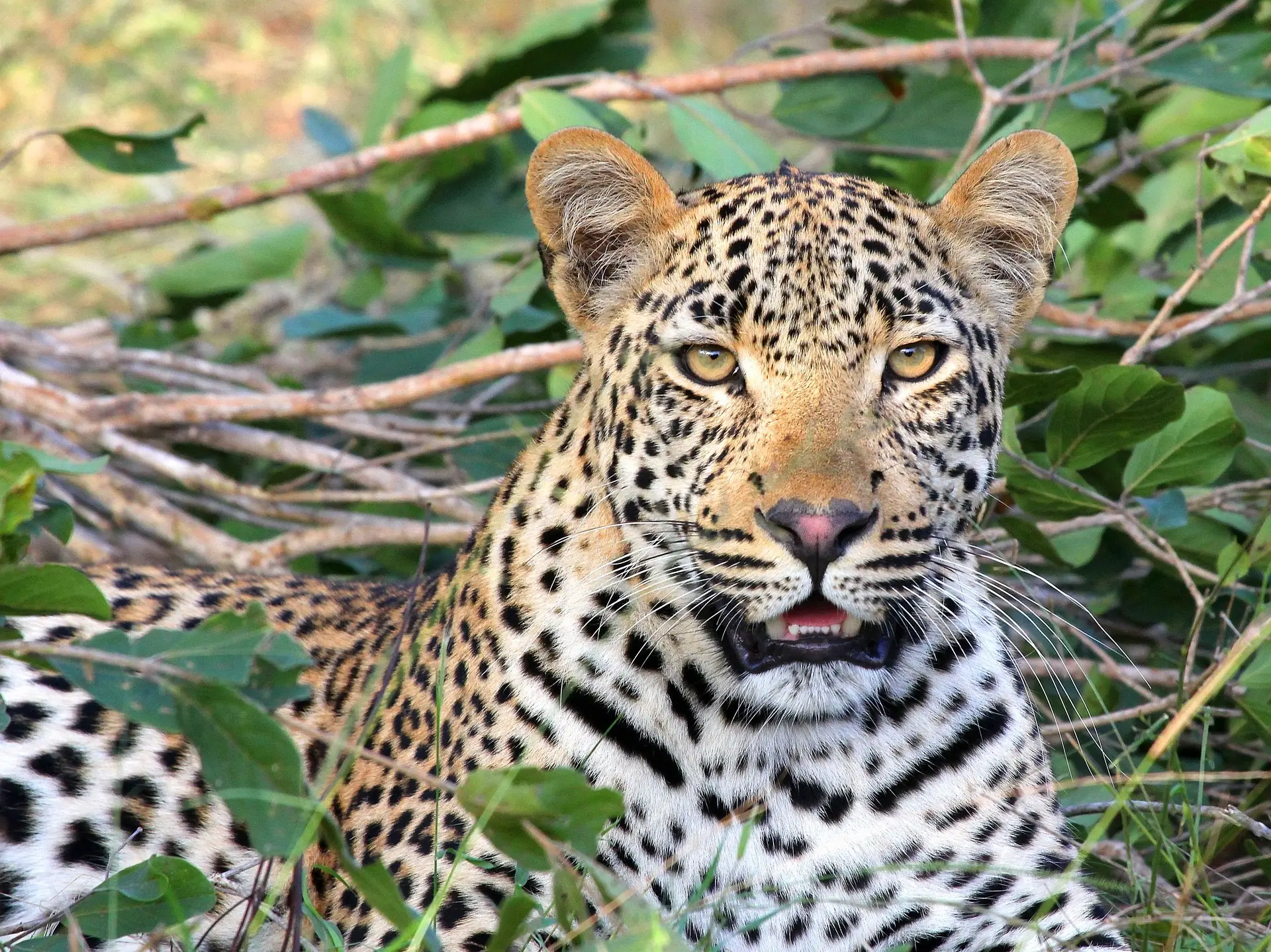
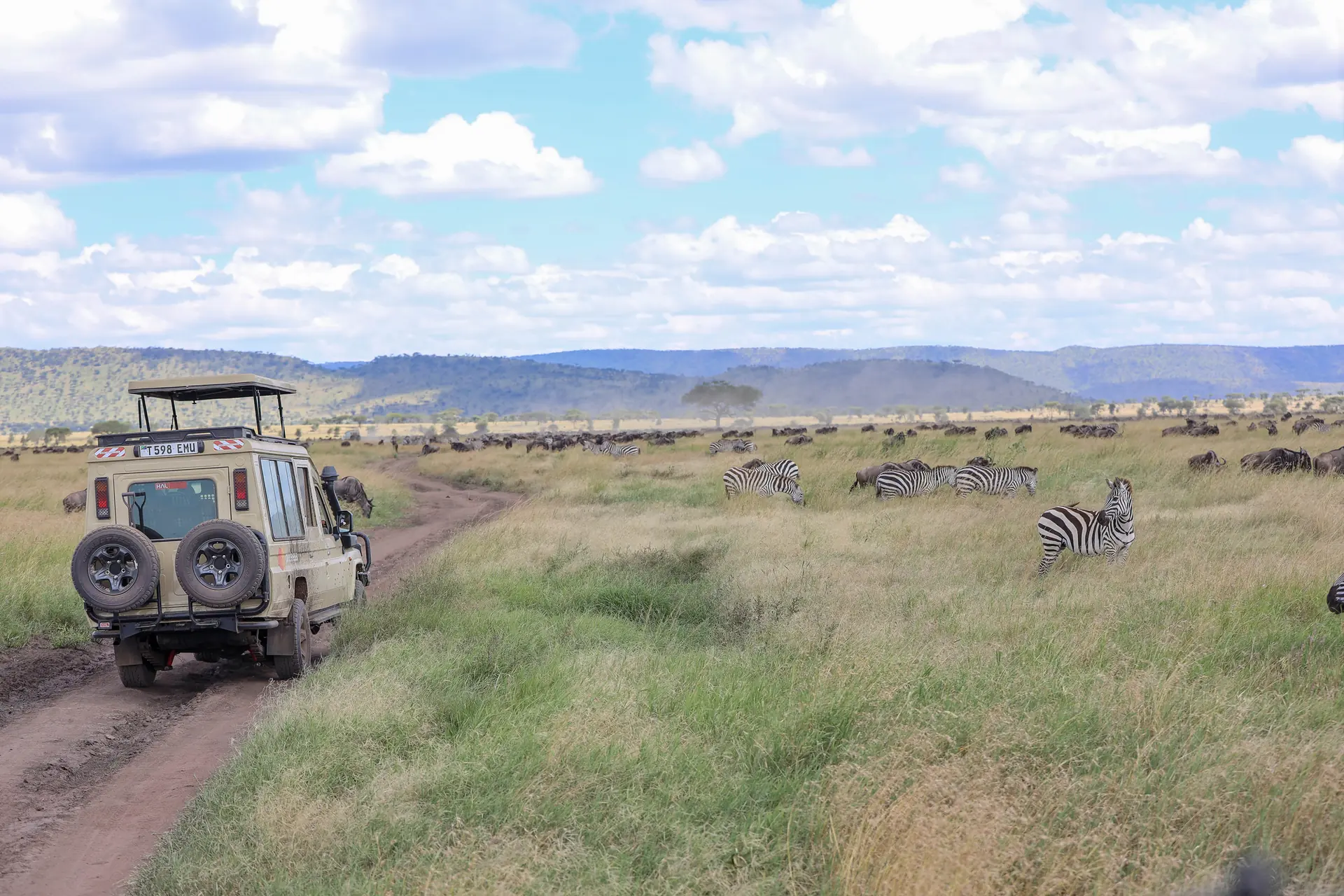
After lunch we drive into the Serengeti itself and the rest of the afternoon is spent game viewing in the vast plains that are broken only by stands of acacia trees and the occasional kopje. In December, January and February we will normally meet the migration with large herds of wildebeest, zebra, and gazelle. There are always plenty of resident animals, such as giraffe, buffalo, and elephant, and many large predators such as lion, cheetah, and leopard. We return to our special tented camp for the night.
Dinner and overnight at Serengeti Wild Tented Lodge: Full board.

We have another full day in this wonderful park, rising early to make the most of our time. Our guides will choose the best spotting locations for the time of year; we can spend time at the Hippo pool watching these majestic animals laze about in the cool water happily living alongside the crocodiles, watch a big pride of lions, be in the middle of the migration, sometimes surrounded by wildebeest, sometimes by zebras, which travel with the wildebeest.
We journey from the wide open plains to the kopjes: these volcanic rocky outcrops provide protection and shelter for a wide variety of animals and from the top we can look out across the vast grasslands of the Serengeti. This diverse and interesting landscape will provide us with the ultimate in game viewing,
we will hopefully see all of the plain games; elephants, giraffe, zebra, wildebeest, lions and it you are lucky the elusive leopard and cheetah, as well as huge amounts of interesting bird life, from the elegant secretary birds to the flightless ostrich. We return to our special tented camp for the night.
We start the day with an early morning game drive before heading to Ngorongoro Conservation Area. Ngorongoro is a special place in that it is a Conservation Area, not a National Park; this means that the whole area is managed for both the animals and the local Masai people who graze their cattle alongside the indigenous wildlife. During the drive in Ngorongoro we have a chance to glimpse something of the Masai way of life.
After stopping at the entrance gate, where there is a chance to learn more about this fascinating volcanic landscape, we will drive around the rim of the Crater itself, and from here we can look down and see the herd of wildebeest or buffalos. Finally we descend into the crater.
The crater walls provide a natural sanctuary for the animals, which means there is plenty to see: lions, elephants, buffalo, rhino and leopard (if you are lucky). The only animal you won’t see in here is a giraffe, whose long legs are unable to cope with the steeps sides of the crater. In the late afternoon we travel back to our special tented camp.
Dinner and overnight at Ngorongoro Wild Tented Lodge: Full board.
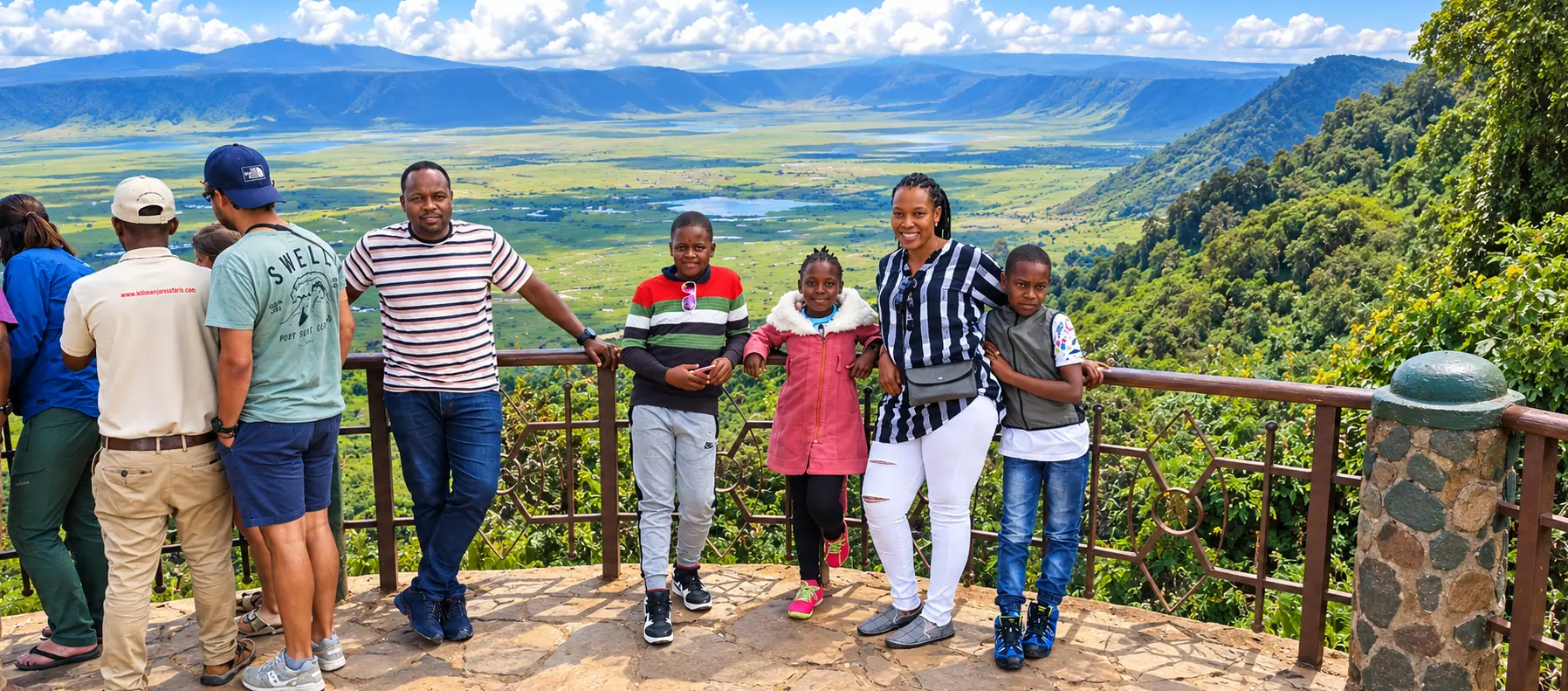
Today we will descend 2000 feet (over 600 meters) to the floor of the Ngorongoro Crater for your crater tour. Here you we will explore the forest areas inhabited by monkeys and elephants, the lake area, where we may see flamingos. We will also visit the open savannah where the lions hunt. Picnic lunch will be served in the crater. In late afternoon we make a short journey to Eileen’s Lodge.
We depart from your lodge in Karatu and proceed to Lake Manyara National Park. Although small in size, this park is one of the most diverse reserves in the country. Lake Manyara covers two thirds of the park. At the backdrop is the wall of the Great Rift Valley, before which lies the ground water forest, areas of open grassland near the lake foreshore and the Soda Lake.
We enjoy a picnic lunch in this area, which consists of open grassy areas, hot springs, dense woodlands and steep mountainsides. Lake Manyara National Park is a birding paradise that has more than 350 species of bird. The park is also famed for its unique and elusive tree-climbing lions.
After lunch time we will drive direct to Kilimanjaro International Airport, we hug together for the evening flight.