


如何前往
乞力马扎罗国际机场离这座山很近,登山从距莫希或阿鲁沙约一小时车程的山门出发。

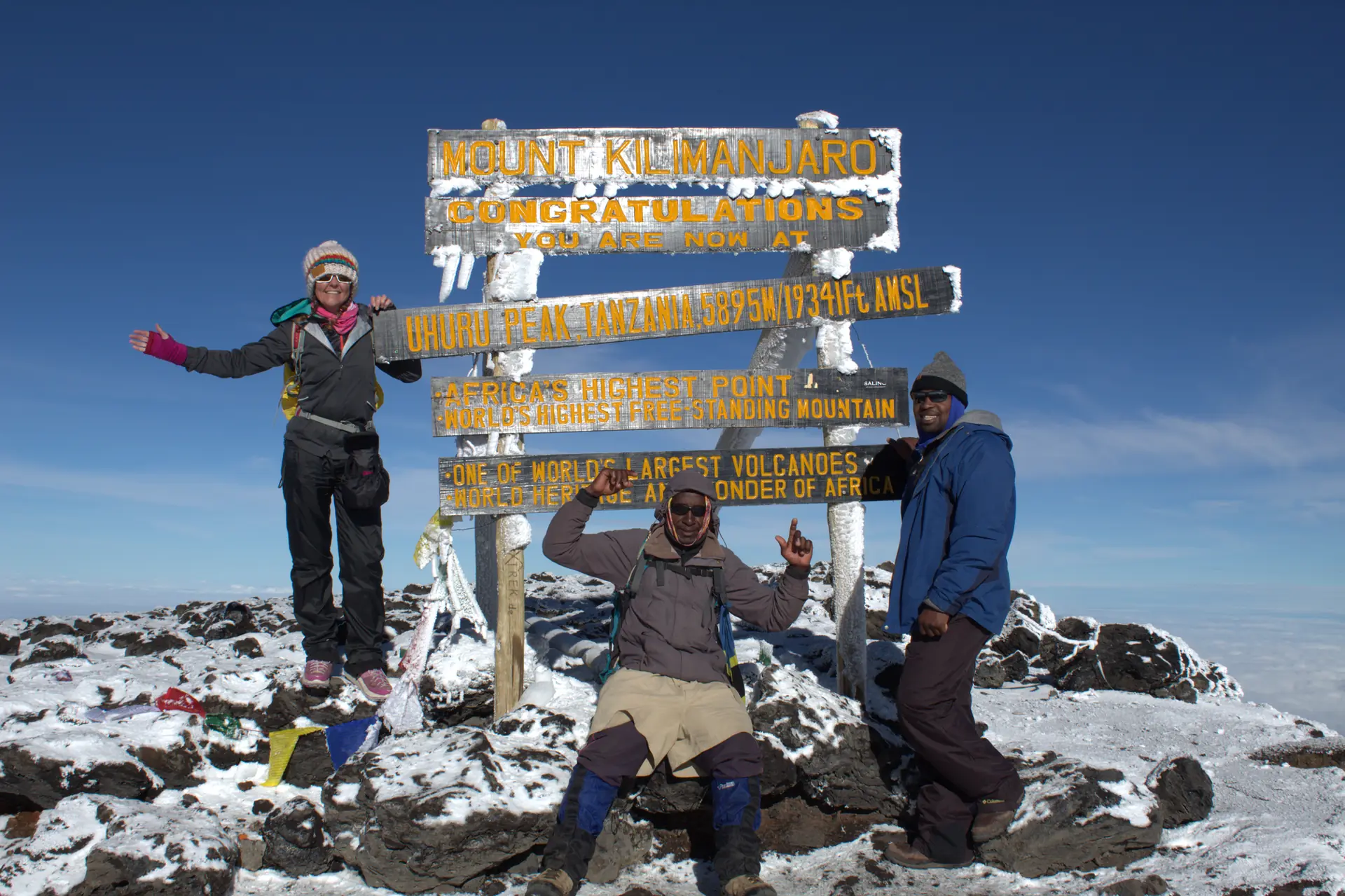
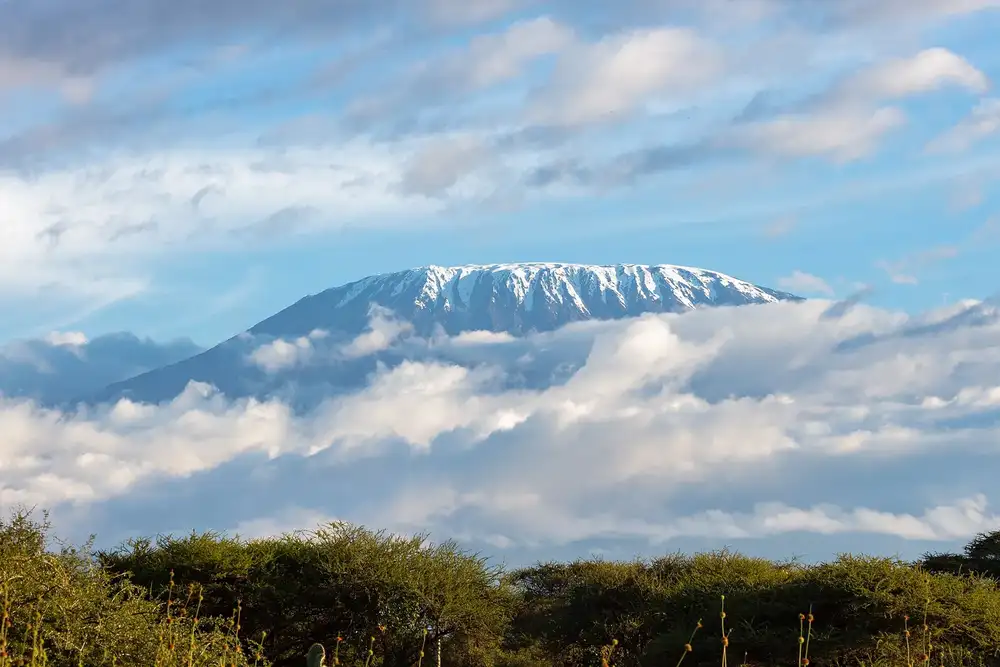
非洲最高峰,海拔 5,895 米,也是世界上最大的独立山峰,国家公园面积 75,675 公顷。
乞力马扎罗山海拔5,895米,是非洲最高的山,也是世界上最大的独立山峰。无需技术攀登技能,您就可以通过连续多天的长途徒步登顶。
攀登途中会穿越五个气候带,从农田和雨林,到灌木荒原、高山荒漠和冰川覆盖的山顶。

雨林中有蓝猴和疣猴、林羚和许多鸟类。再往高处,景观更加寂静,野生动物仅限于少数耐寒的物种。

1月至3月初和6月至10月是主要旱季。这座山全年都可以攀登。
乞力马扎罗国际机场离这座山很近,登山从距莫希或阿鲁沙约一小时车程的山门出发。
山上五至九天,取决于路线;较长的路线给您更多适应高海拔的时间。
这取决于您的体能、时间和预算。请查看我们的乞力马扎罗部分,了解全部六条路线的对比。
告诉我们您的想法,我们会回复坦诚的建议和量身定制的报价。
此内容仅提供英文版。
At 19,340 ft., Kilimanjaro is the highest mountain in Africa and the largest free-standing mountain in the world. Surrounding the base of this huge dormant volcano is tropical montane forest rich with unique flora and fauna. Further up, heath forest opens into a moorland dotted with giant senecio and lobilia. A magnificent zone of rock and ice leads to the summit crater where sulfur gas still emits from the ash pit. Just above the crater floor is Uhuru Peak, the mountain’s true summit.
Climbing Kilimanjaro has become increasingly popular in recent years. The Marangu (Tourist) Route in particular has become severely congested. In an effort to keep our experience high quality, African Environments decided to stop using the Marangu Route in 1995 and to develop new routes on the spectacular western side of the mountain. Our clients on these western routes not only enjoy a pristine wilderness experience, they also ascend more gradually, allowing their bodies to acclimatize more fully to the extreme elevations. The journey is far more pleasant and avoids many of the potentially life-threatening high altitude medical problems associated with a shorter climb.
Kilimanjaro National Park Tanzania East Africa Has an area of 75,675 hectors(756.75sq kilometers) and protects the largest free-standing volcanic mass in the world and the highest mountain in Africa, rising 4877m above surrounding plains to 5895m at its peak. With its snow-capped peak, Kilimanjaro is an excellent natural phenomenon, standing in isolation above the surrounding plains overlooking the savannah.
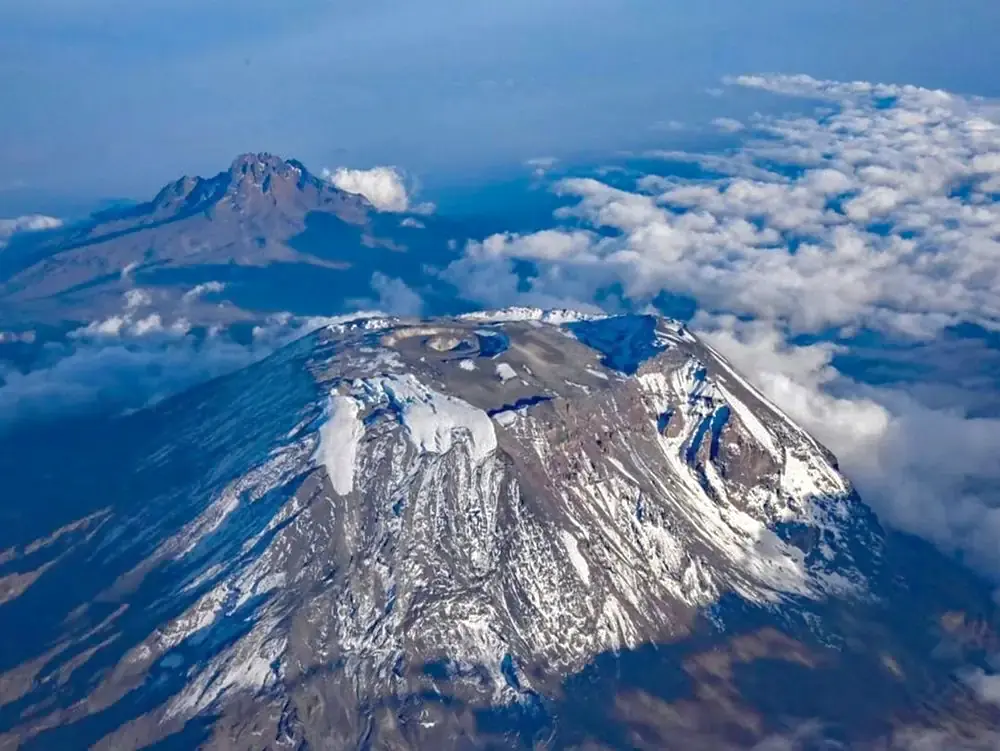
Mount Kilimanjaro is Located about three degrees or 206 miles south of the equator in the Kilimanjaro region, in northern Tanzania adjacent to the boundary of Kenya. Mount Kilimanjaro is one of the largest volcanoes in the world. It has three main volcanic peaks, Kibo 5895mt in the center , Mawenzi 5149mtrs in the east , and Shira 3962mtrs in the west . Its snow-capped peak and glaciers make it the highest mountain in Africa .
The mountain has five main vegetation zones from the lowest to the highest point: Lower slopes, montane forest, heath and moorland, alpine desert, and summit. The whole mountain including the Montane forest belt is very rich in species, in particular mammals, many of them endangered species. For this combination of features but mostly its height, it is the physical form and snow cap, and its isolation above the surrounding plains, Mount Kilimanjaro is considered an outstanding example of a superlative natural phenomenon.
Mount Kilimanjaro is a major tourist attraction for experienced and beginning climbers. To get to the mountain, the most convenient way is to fly into Tanzania (Kilimanjaro International Airport), and then travel to Arusha or Moshi, Kilimanjaro’s gateway towns, by vehicle. Both cities are approximately 50 minutes away from the airport and taxi services are readily available. Top Travel Safaris Adventure Tanzania offers expert travel planning and guides for getting here!
Usually, March, April, and May are the months with long rains and should be avoided.
In November and December, Tanzania’s short rainy season, it can be wet in the rainforest with snow toward the top of the mountain. However, clouds often disperse in the evening, allowing for excellent visibility in the night and morning. Climbers sometimes encounter violent storms with thunder and lightning in December, especially on the Northern and Western slopes of Mount Kilimanjaro .
The best times for climbing Kilimanjaro are the driest months of the year, especially Jan, Feb, and June—October offers reasonable chances of good, July can be colder, and January to February is the warmest months, with almost clear clouds each evening and morning.
There are six established routes to use while climbing Kilimanjaro. They vary in length and difficulty. All except one require you to camp. If you climb Kilimanjaro on the Marangu route your accommodation is in huts and camping is not allowed.
Five days are the absolute minimum duration for a Kilimanjaro climb, six Days are much better. If climbing using the Machame route six days is the minimum, seven days are recommended. Taking an extra day for acclimatization will greatly improve your chances to reach the summit. There are longer treks available for those who can afford them. Take a look at our Kilimanjaro Itineraries.

In the forest at lower elevations, you will experience hot and humid weather with temperatures around 15 to 25°C / 60 to 75°F. As you ascend on days 2 and 3, it can be dry and warm with temperatures around 10 to 18°C / 50 to 65°F. As you climb higher, temperatures will fall, Expect freezing temperatures at night. At the summit average daytime highs are about -4°C / 25°F with overnight lows around -10°C / 15°F, though it always feels much warmer in the sun and much colder at night. Wind chill temperatures can be as low as -18 to -12°C / 0 to 10°F.