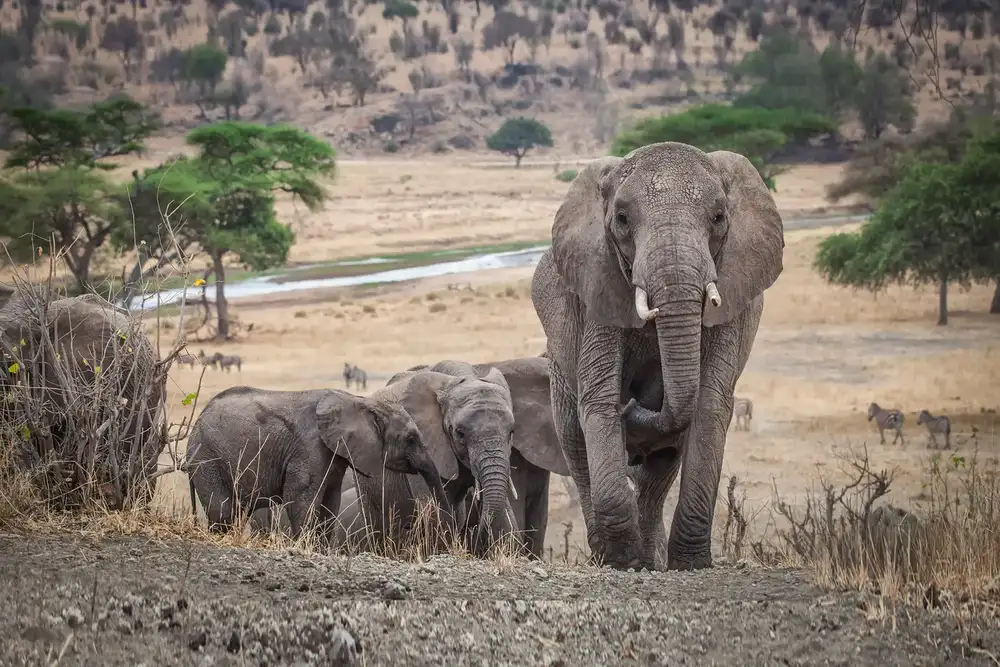


7díasAscensiones al Kilimanjaro
Trekking de 7 días al Kilimanjaro, ruta Machame
Puerta de Machame · Shira · Barranco · Barafu · Uhuru Peak · Puerta de MwekaAlojamiento: Acampada en la montaña
Precio a consultar
Ver itinerario
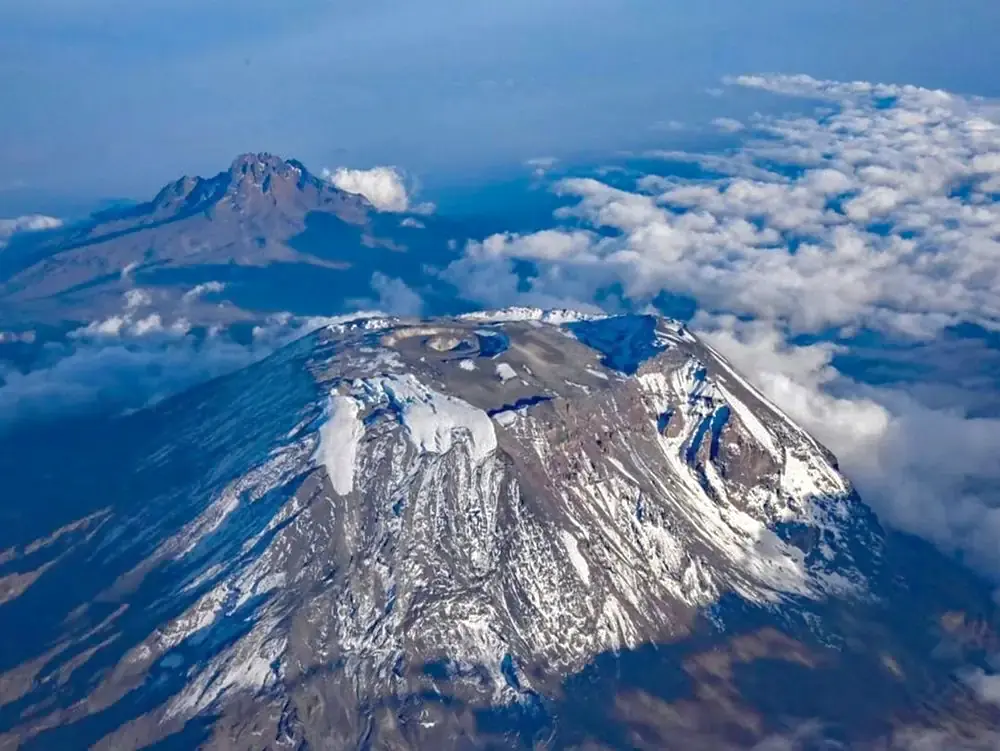
Una salida tranquila por el oeste a través de una selva remota, y después la meseta de Shira hasta los glaciares del sur y la cumbre. Una ruta preciosa con buen tiempo para aclimatarse.
Considerada una de las rutas más bonitas del Kilimanjaro.
Cada itinerario se puede personalizar, con alojamiento económico, de gama media o de lujo.

Día 1
Registro en la puerta de Londorossi, viaje por tierras de cultivo hasta el inicio de Lemosho y un sencillo sendero por el bosque hasta el campamento.
Día 2
Se deja el bosque por el páramo de brezos gigantes y se sube de forma constante hasta el borde de la meseta de Shira; después se cruza parte de ella hasta el campamento.
Día 3
Una subida por la mañana hasta el almuerzo cerca del cruce de Lava Tower y descenso al fondo del valle de Gran Barranco, un campamento resguardado por acantilados.
Día 4
Subida del empinado muro de Barranco y después por el flanco sureste del Kibo, con vistas a los campos de hielo del sur, hasta Karanga, el último punto de agua antes de la cumbre.
Día 5
Un camino fácil sobre grava compacta hasta Barafu, con una corta caminata de aclimatación hasta 4.800 m. Descanso temprano antes de la cumbre.
Día 6
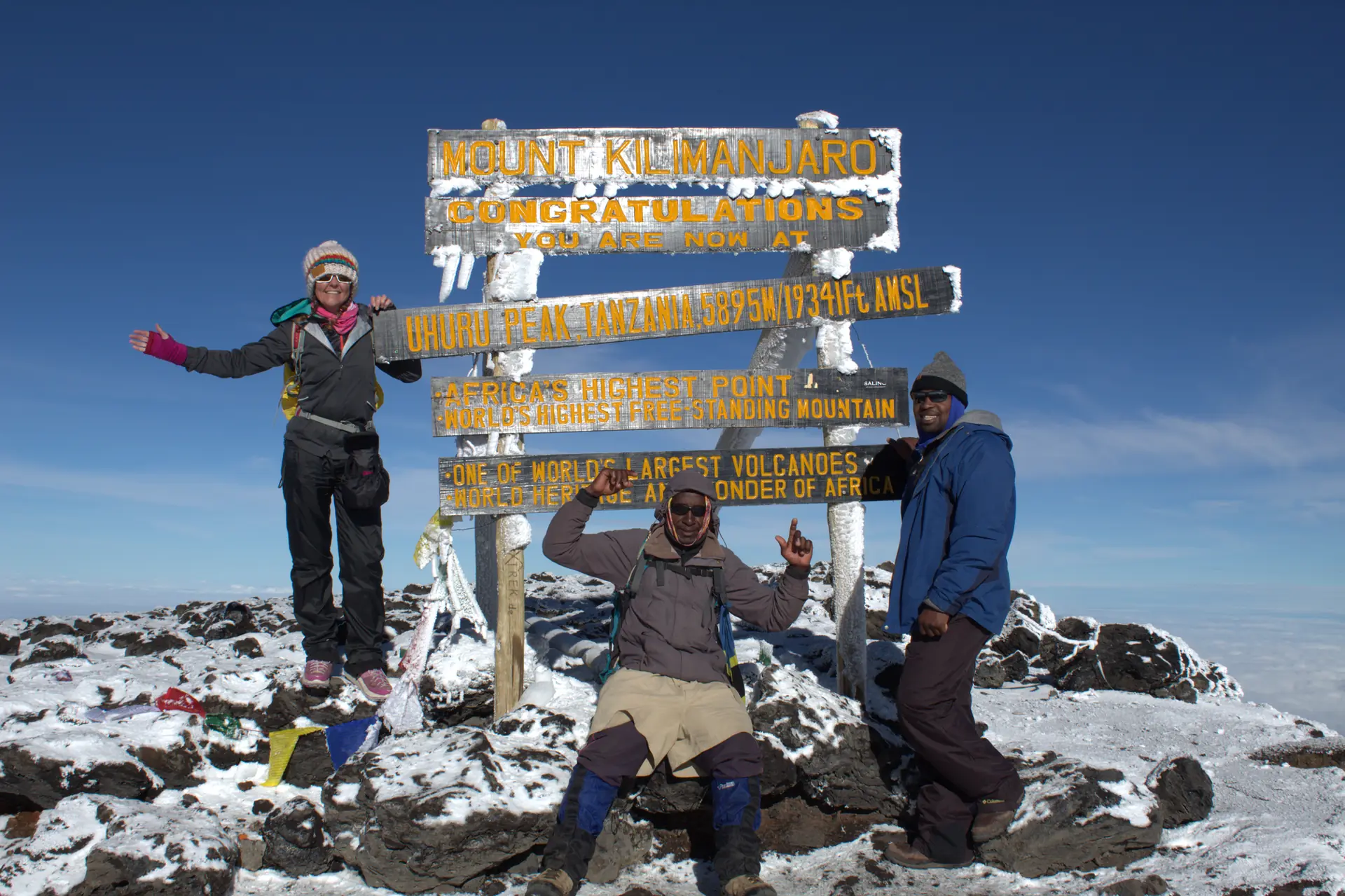
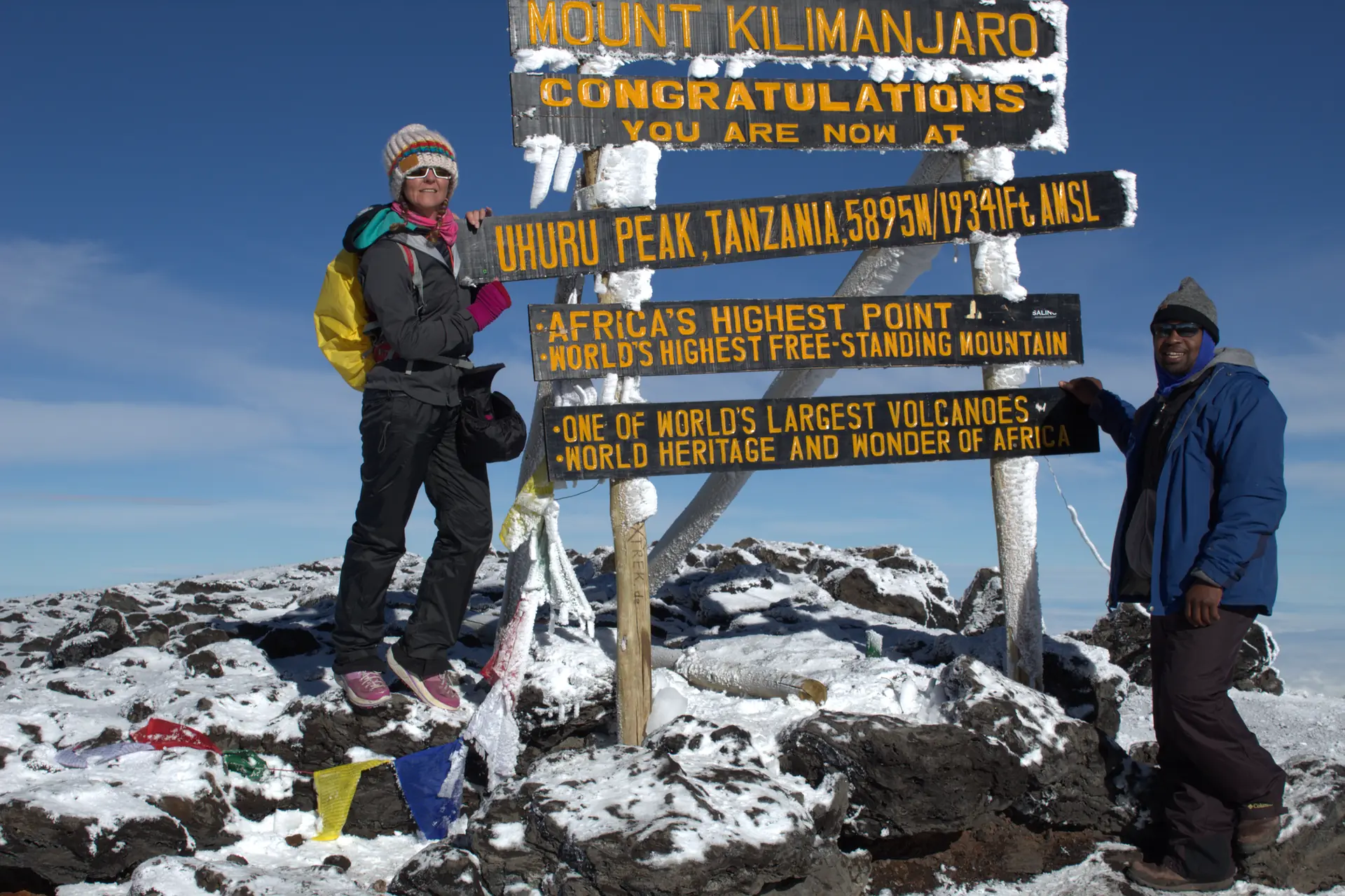
Salida hacia la 1:00 con frontal para llegar a Stella Point (5.735 m) al amanecer y, si se siente fuerte, a Uhuru Peak. Descenso a Millennium Camp.
Día 7
Un largo descenso por el bosque hasta la puerta de Mweka y después entre cafetales y bananos hasta el pueblo de Mweka.
Lo incluido y lo no incluido se confirma en tu presupuesto por escrito.
Solo mostramos opiniones reales y verificables, de las plataformas donde nuestros viajeros las escribieron.
No. El Kilimanjaro es una caminata, no una escalada técnica, y no requiere equipo especial ni conocimientos de escalada. Sí es necesario estar en forma.
En la ruta Machame de siete días, más del 95 % de nuestros participantes llega a la cima, gracias al día adicional de aclimatación y a una planificación cuidadosa. En las rutas más cortas, el índice de éxito es menor.
Sí. Para la ascensión es obligatorio un seguro de viaje y de gastos médicos completo.
No. Las propinas para los guías, los porteadores y el cocinero son habituales y no están incluidas en el precio.
Sí. Es una combinación muy popular y planificamos el viaje completo por usted. Consulte nuestras páginas Safari + Kilimanjaro y Safari + Zanzíbar.
Cuéntanos qué tienes en mente y te responderemos con consejo honesto y un presupuesto a medida.
El depósito, las formas de pago, las cancelaciones y los reembolsos se detallan en nuestras condiciones de reserva. Leer las condiciones de reserva
Alojamiento: Acampada en la montaña
Precio a consultar
Ver itinerarioAlojamiento: Refugios de montaña
Precio a consultar
Ver itinerarioAlojamiento: Campamentos de montaña y luego lodges
Precio a consultar
Ver itinerarioAlojamiento: Hotel y lodge en el borde del cráter
Precio a consultar
Ver itinerarioAlojamiento: Lodge o campamento, según presupuesto
Precio a consultar
Ver itinerarioAlojamiento: Lodges y campamentos de tiendas
Precio a consultar
Ver itinerarioEste texto solo está disponible en inglés.

This is regarded as one of the prettiest route on Kilimanjaro. We begin trekking in the thick, fertile rainforest until we reach the wildflowers and shrubs of the heath ecosystem. Approaching from the west, we cross one of most beautiful areas on Kilimanjaro, the vast Shira Plateau, before traversing the mountain along the southern circuit. The Lemosho route is for those with previous backpacking experience.

After completing the necessary registration formalities at Londorossi National Park gate, we drive through varied farmland with open views over the plains to reach the Lemosho road head. The last section of the road is of poor quality and difficult to drive after rain, sometimes we start walking a kilometer or two below the road head. We often have our lunch at the road head before starting to walk. It is an easy day of walking up a small path through beautiful and lush forest. We camp at Lemosho Big Tree C amp (2,650 m); [2-3 hours walking]
We soon leave the forest behind and enter the moorland zone of giant heather. The trail climbs steadily with wide views to reach the rim of the Shira Plateau . There is a tangible sense of wilderness, especially if afternoon mists come in! We walk part way across the plateau to Shira One Camp (3,550 m) [6-8 hours walking]
A morning of sustained ascent and panoramic views brings us to lunch near the Lava Tower junction (4,550 m.). The trail then descends to the bottom of the Great Barranco valley (3,900 m); another spectacular campsite sheltered by towering cliffs and with extensive views of the plains far below. [7-9 hours walking]
A steep climb up the Barranco Wall leads us to an undulating trail on the south-eastern flank of Kibo, with superb vistas of the Southern Icefields. The terrain changes to scree, with pockets of lush vegetation in sheltered hollows, and there is only a short distance to our camp at Karanga (4,000 m), the last water point on the way to the summit. [4-5 hours walking]
We follow an easy path on compacted scree with wide views that gains altitude unrelentingly to reach the Barafu campsite (4,600 m) for lunch. There is a short acclimatization walk to the plateau at the bottom of the South-East valley (4,800 m). The remainder of the day is spent resting in preparation for the final ascent before a very early night. [3-5 hours walking]
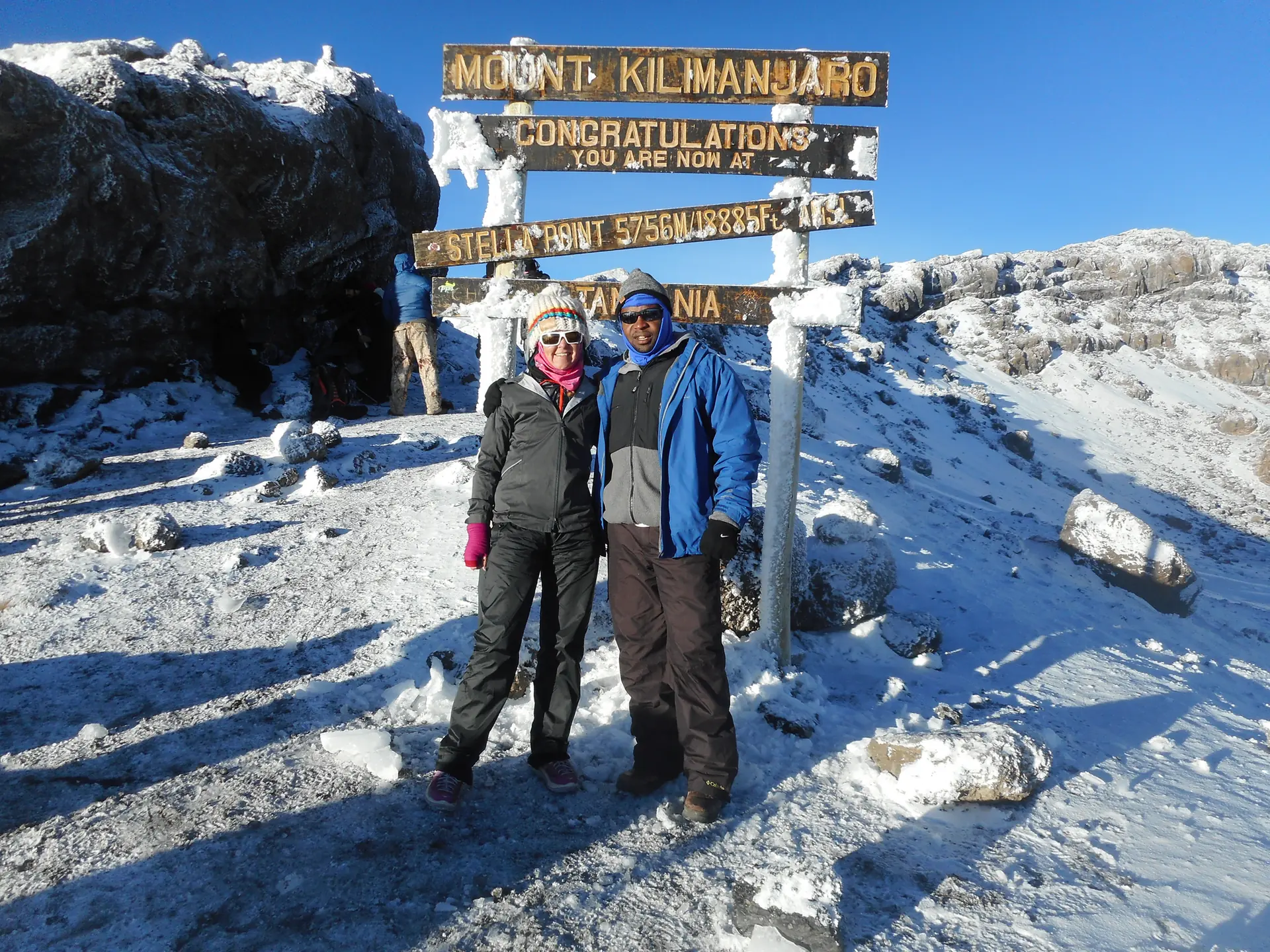
We will start our ascent by torchlight at about 1 a.m. so that we can be up on the Crater rim by sunrise. The steep climb over loose volcanic scree has some well-graded zig-zags and a slow but steady pace will take us to Stella Point (5,735 m), in about five or six hours. We will rest there for a short time to enjoy the sunrise over Mawenzi. Those who are still feeling strong can make the two hour round trip from here along the crater rim to Uhuru Peak (5,896 m), passing close to the spectacular glaciers and ice cliffs that still occupy most of the summit area. The descent to Barafu is surprisingly fast, and after some refreshment, we continue to descend to reach Millennium Camp (3,800 m). [10-15 hours walking]
A sustained descent through lovely forest with lush undergrowth takes us to the National Park gate at Mweka (1,650 m); and on through coffee and banana farms to Mweka village. [4-6 hours walking]