
9daysWildlife safaris
9 Day Serengeti Wildebeest Migration Safari
Arusha · Tarangire · Ndutu · Serengeti · Ngorongoro · Lake Manyara · ArushaAccommodation: Lodges and tented camps
Price on request
View itinerary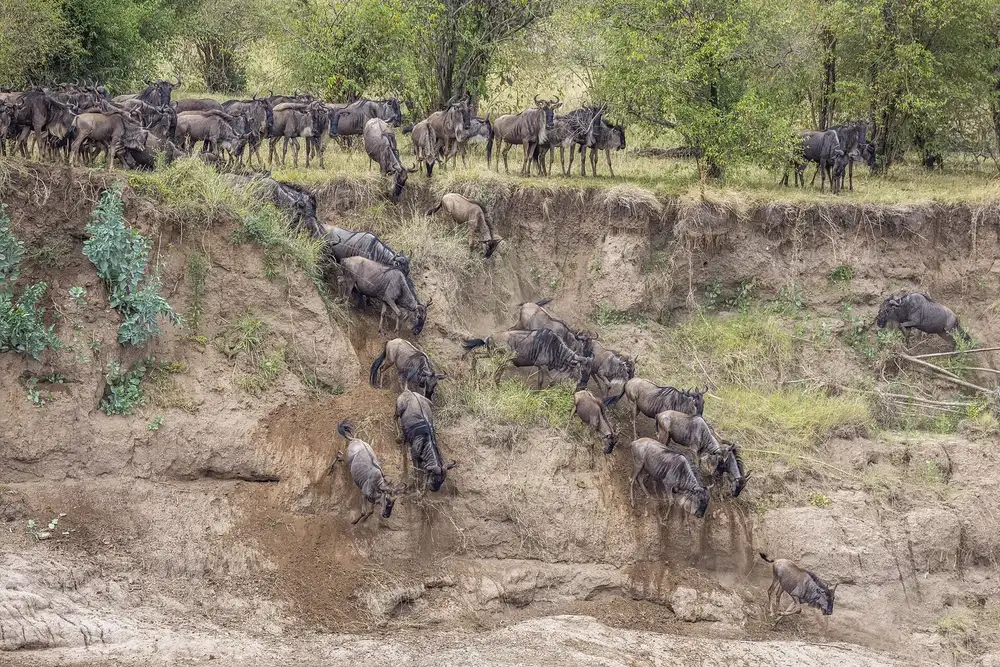
Be in the right part of the Serengeti at the right time of year.
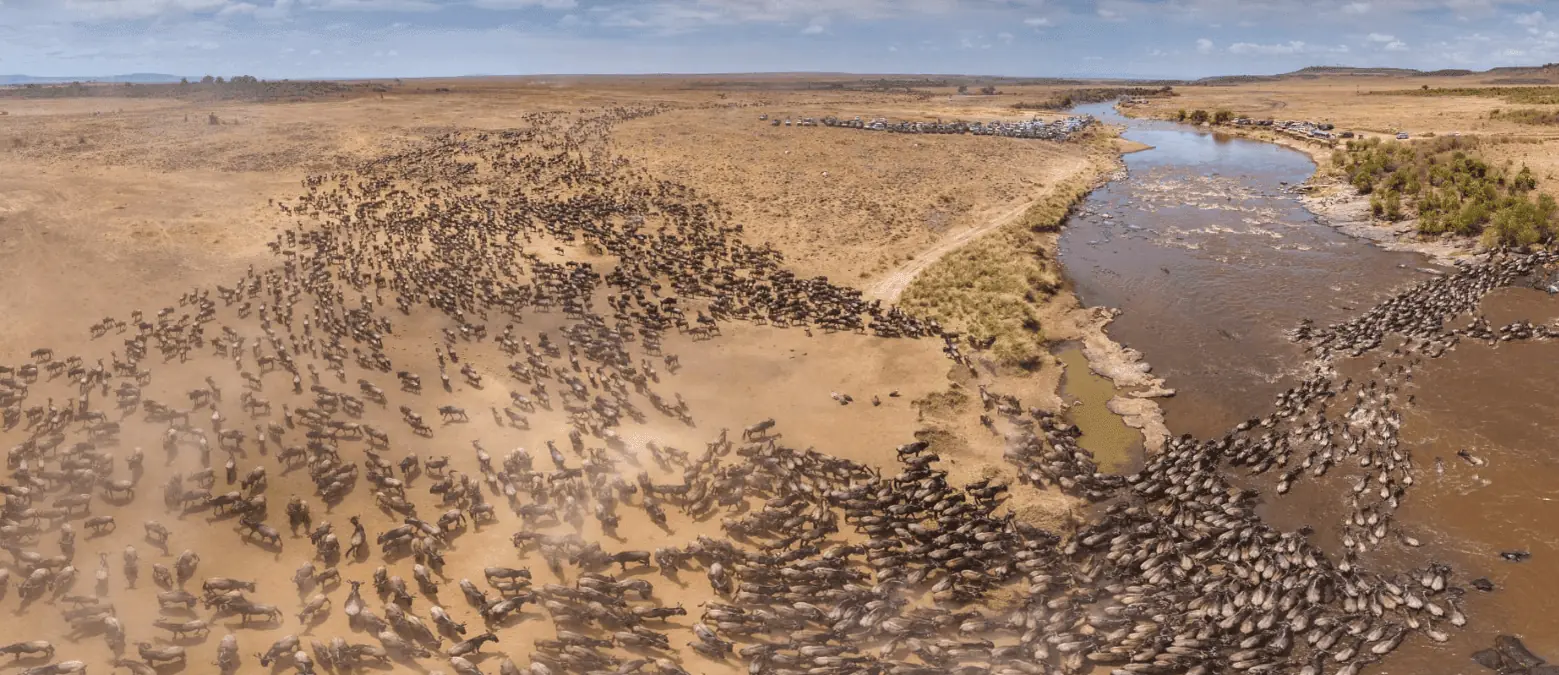
The Great Migration is a year-round movement of more than a million wildebeest, together with zebra and gazelle, through the Serengeti. The best place to be depends on the month.
We plan your route around where the herds are most likely to be on your dates, and we confirm closer to travel.
Southern Serengeti and Ndutu, with newborn calves and predators close by.
The herds move north-west across the Grumeti River.
Northern Serengeti around Kogatende and the Mara River.
The herds move back to the southern plains.
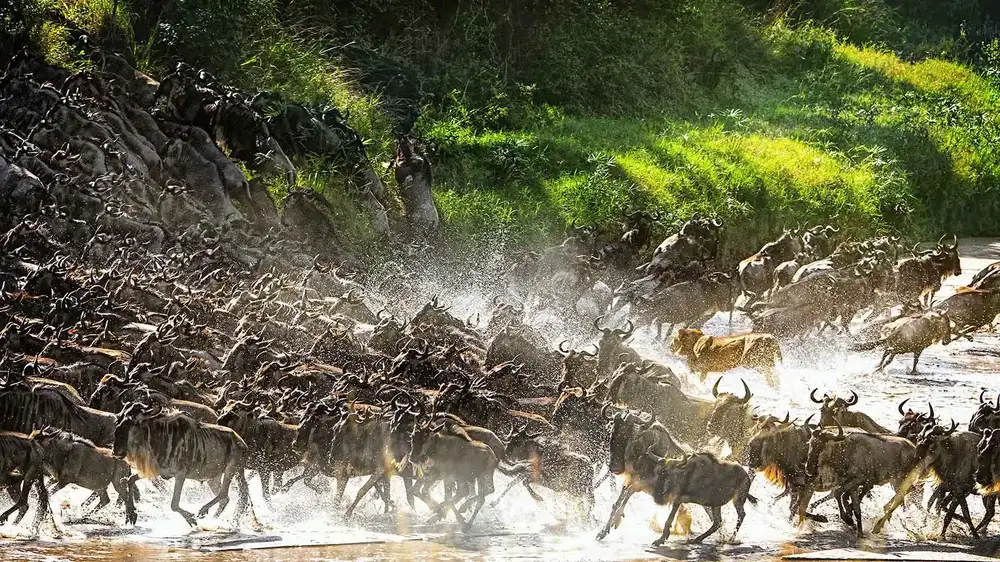
The herds follow the rains and fresh grass in a broad loop through the Serengeti and into Kenya's Maasai Mara. There is no start or end: the movement continues all year, and its timing changes from year to year. Because the timing depends on the rains, no two years are exactly the same, and the herds may arrive in an area a few weeks earlier or later than usual. We follow reports from guides and camps in the field during the season and plan your route around the most likely areas for your dates.
Around one and a half million wildebeest take part, together with hundreds of thousands of zebra and gazelle. Lions, cheetahs, hyenas and crocodiles follow the herds, which makes for some of the most dramatic wildlife viewing in Africa. The migration is not one single herd but many groups spread across the plains, sometimes in the thousands, sometimes in long columns stretching to the horizon. Even when the main herds are elsewhere, the Serengeti has resident wildlife all year, so every safari offers excellent game viewing.
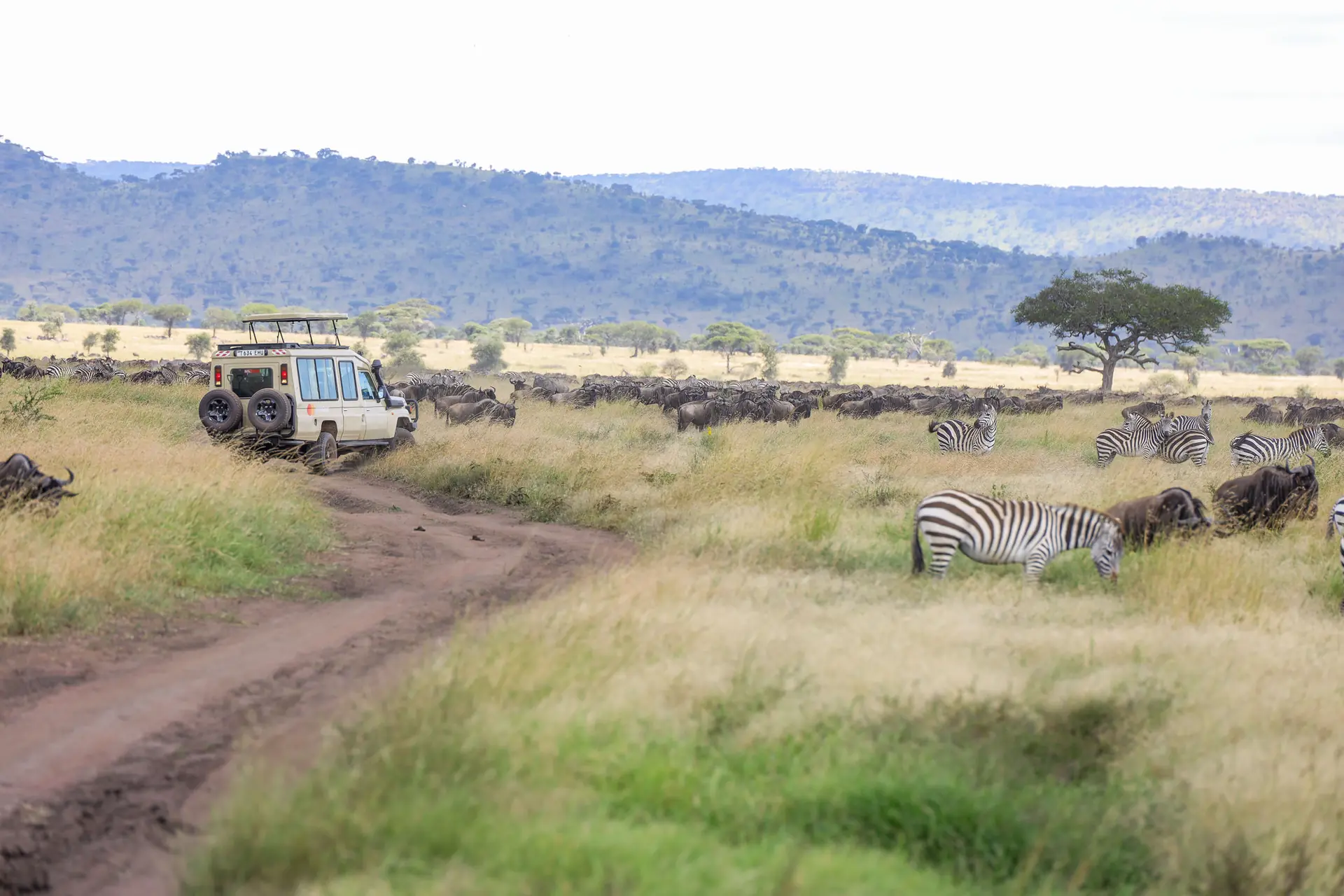
From about January to March, the herds gather on the short-grass plains of the southern Serengeti and the Ndutu area. Hundreds of thousands of calves are born within a few weeks, usually with a peak in February. The predators that follow the herds are just as much part of the experience. Lions, cheetahs, leopards and hyenas take advantage of the abundance, and the plains offer some of the best chances in Africa to watch them hunt. It is an intense and unforgettable spectacle.
It is a busy time for predators and a rewarding time for photographers. The weather is warm, with short showers, and the plains are green. This is also a good time for birds, as migratory species arrive from Europe and Asia and the plains fill with life. Accommodation in the south fills quickly in February, so booking early is recommended if you want to stay close to the herds during the peak of calving.

From about July to October, the herds reach the northern Serengeti and cross the Mara River, often several times. Crossings can happen at any time of day and may take hours of waiting, so patience is part of the experience. Watching a crossing is dramatic: thousands of animals gather on the riverbank, hesitate, then suddenly plunge into the water while crocodiles wait below. Each crossing is different, and the build-up can be as exciting as the moment itself.
Staying in a camp in the north for at least two or three nights gives the best chance of seeing a crossing. Your guide follows the herds closely and will move to where the action is. The northern Serengeti is remote and has fewer camps than the central areas, so it is worth planning early. Flying to an airstrip in the north saves a long drive and gives you more time near the river, and we can combine it with a few days in the central Serengeti or the Ngorongoro Crater.
Accommodation: Lodges and tented camps
Price on request
View itineraryAccommodation: Lodges and tented camps
Price on request
View itineraryAccommodation: Lodge or camp, as quoted
Price on request
View itineraryAccommodation: Lodges and tented camps
Price on request
View itineraryAccommodation: Hotel and rim lodge
Price on request
View itineraryAccommodation: Mountain camps, then lodges
Price on request
View itineraryEvery itinerary can be customised, with budget, mid-range or luxury accommodation.
Usually between July and October in the northern Serengeti, but timing varies from year to year and cannot be guaranteed.
No. The herds follow the rains, so we plan for the most likely area and your guide adapts on the ground.
Deposit, payment methods, cancellation and refunds are set out in our booking terms. Read the booking terms
Share your dates, interests and budget, and we will reply with a plan built around you.
Plan your safari