

Marangu Route

The only route with sleeping huts, using the same path up and down. (the Coca-Cola Route)

Starts at Marangu Gate in the south-east, with nights in Mandara, Horombo and Kibo huts. Five to six days on the same path up and down.

Overview

The Marangu route is the oldest established route, with dormitory huts at Mandara, Horombo and Kibo. You go up and down the same path, which means you see fewer different landscapes than on other routes.

The five-day version is the shortest way up the mountain, so there is less time to adapt to altitude. A sixth day makes it noticeably easier.

Highlights

  • Huts instead of tents
  • Gradual, well-marked path
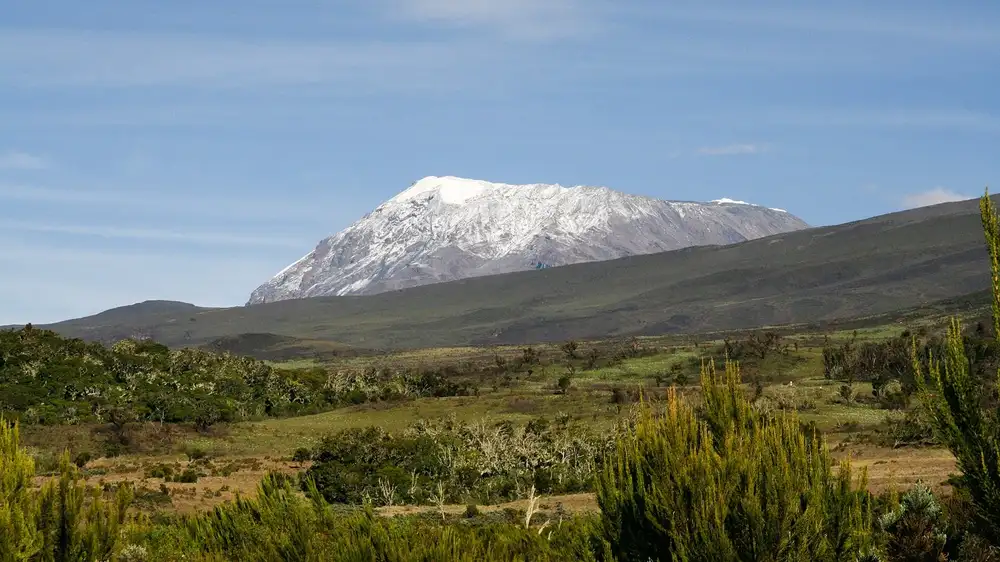
  • Views of Mawenzi and Kibo from Horombo

Who it suits

Travellers who prefer a bed to a tent and are comfortable with a shorter, steeper schedule. Adding an acclimatisation day is advisable.

Life in the huts

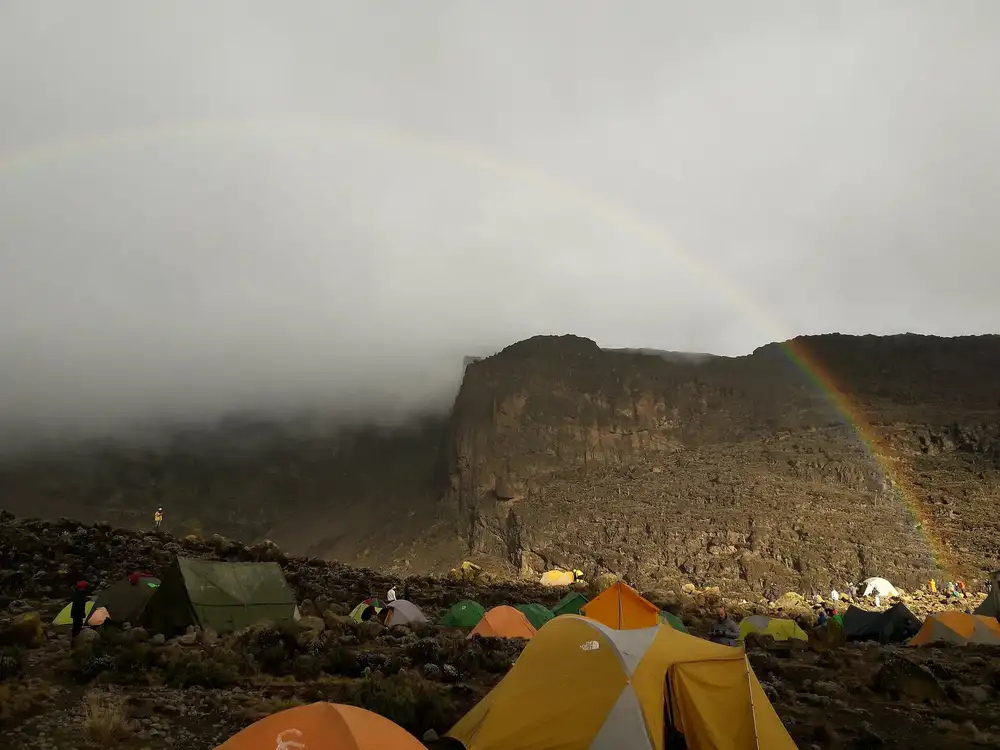
Mandara, Horombo and Kibo huts provide simple bunk beds with mattresses in shared dormitories, as well as dining halls. You still need a warm sleeping bag, and facilities are basic. Water for washing is limited at the huts, and toilets are basic, so a pack of wet wipes is useful. Meals are prepared by your own cook and served in the dining hall, often with soup, fresh vegetables and plenty of carbohydrates to keep your energy up.

Huts give shelter from rain and wind, which many climbers appreciate in the wetter months. They are shared with other climbers, so earplugs are useful. Because the huts are fixed, the route gets busy in the main seasons, and the dormitories can be noisy at night. A good sleeping bag rated for low temperatures, warm clothes for the evenings and a head torch make the nights more comfortable.

The extra day at Horombo

The six-day version adds a second night at Horombo Hut, at about 3,700 metres. On the rest day you walk higher, often towards the Zebra Rocks or the saddle below Mawenzi, and return to sleep at Horombo. Walking higher during the day and returning to sleep lower helps the body produce more red blood cells and adjust to the thinner air. It also gives your legs a lighter day before the long summit night, and you can enjoy views across the saddle to Mawenzi.

This is the climb-high, sleep-low principle that helps the body adapt, and it noticeably improves the chances of a successful summit. If your schedule allows only five days, the climb is still possible, but the jump to higher altitude is faster. We always recommend the six-day version, especially for first-time climbers, to give the best chance of a successful and enjoyable summit.

Summit night on Marangu

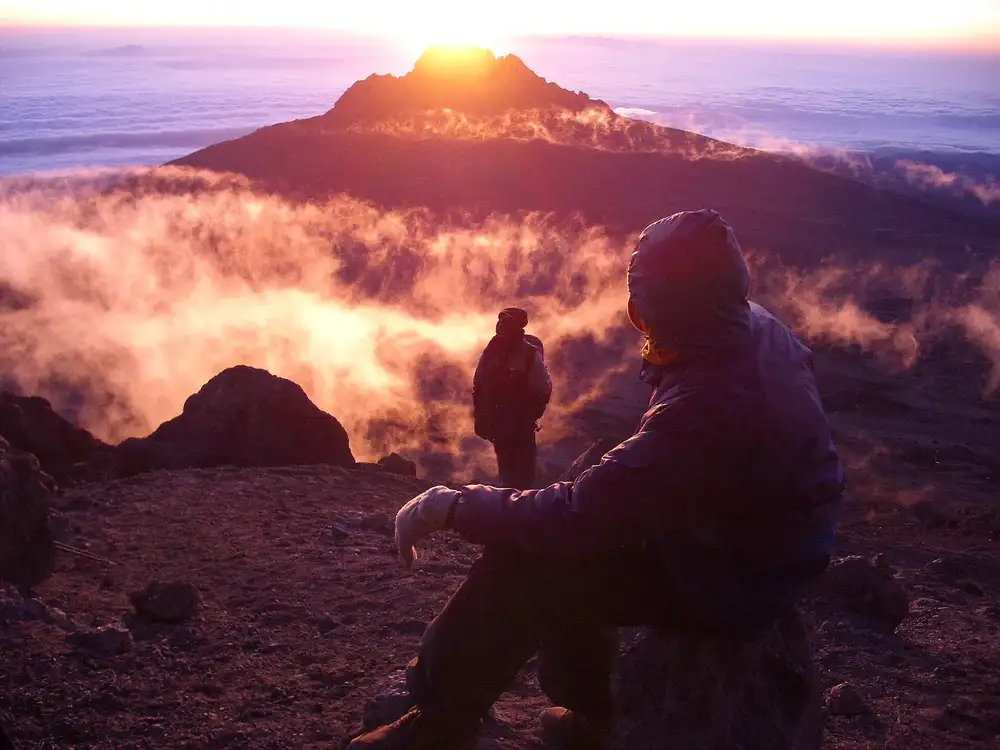
From Kibo Hut the summit climb starts around midnight up steep scree to Gilman's Point on the crater rim. From there, the path continues along the rim to Uhuru Peak. Gilman's Point, at about 5,685 metres, is the first point on the crater rim and counts as a recognised summit point. Continuing to Uhuru Peak takes another one to two hours along the rim, with views of the glaciers and the crater.

The descent follows the same path, with a night at Horombo on the way down before you walk out through the forest to Marangu Gate. Walking down the same path you climbed means you pass familiar places, but in reverse, and the descent is fast. Many climbers reach Horombo in the afternoon of summit day and walk out the next day, celebrating with the crew at the gate.

Plan this climb

5 Days Climb Kilimanjaro, Marangu Route

Read our Kilimanjaro preparation guide

More details

Nicknamed the "Coca-Cola" route because the route is popularized as easy and cheap. This, however, is a misconception as the route is more difficult due to the ‘not as good acclimatization profile’ as Machame/Rongai/Lemosho routes.

Marangu is only route that has the luxury of sleeping huts along the way with evening meals taken in a communal dining area. There are even showers (cold) and some flush toilets, which to some are actually a bit of a luxury on the mountain, and is the perfect for those with no camping experience.

Often selected by unprepared, inexperienced climbers because of its reputation for being the "easiest" route, attributing to the lower success rate

The shortest and cheapest route, but less time to acclimatize, therefore lower success rate

Dormitory style accommodation in huts, Less scenic due to ascent and descent on same route

The Marangu route is a comfortable walking path with a very steady, gradual slope (at least until you reach the last camp). This gave the Marangu route a reputation as an "easy" climb route.But make no mistake: the Marangu route is NOT easy and it is NOT for tourists! It is a serious climb with very low success rates. Only a quarter to a third of the climbers on this route reach the summit of Kilimanjaro. The reason? The "tourists" on this route are shockingly unprepared.

A five day climb does not allow for sufficient acclimatization, many climbers have to turn around because of altitude sickness. (You can add an optional acclimatization day.)

Budget operators have much lower client success rates. Equipment, food, experience level of guides, all that makes a big difference and all that costs money.

The last day before the summit attempt is a long one and covers 1000 m of altitude difference. There is not much time to recover or acclimatize before setting out again at midnight to climb another 1200 m. Not good.

Add to that the lack of scenic variety compared to the other routes, and you wonder why anyone would want to climb Kili on the Marangu route.

Well, even if not as scenic as other routes, it is still a spectacular experience with great views all along. There are two reasons why you may want to climb Kilimanajaro on the Marangu route:

  • You absolutely can not, under no circumstances, imagine sleeping in a tent for five nights or more. (But don’t think those huts offer luxury accommodation or that there are any amenities. There aren’t. You get a mattress and pillow – no linen – on a bunk bed, and you get to eat in a crowded dining hall. No less and no more.)
  • The other reason to select Marangu is if money is your main consideration, before everything else. I you don’t care about scenery, aren’t worried by big crowds, and are willing to accept a reduced chance of success, Marangu is the cheapest option you have. (But do yourself a favour and take that optional extra acclimatisation day.)