

Rongai Route

The only route that approaches from the north, drier and quieter.

Starts near the Kenyan border on the drier northern side and descends by Marangu. Six to seven days, sleeping in tents.

Overview

The Rongai route approaches from the north, near the Kenyan border. The northern side is drier and gets less rain than the southern routes, and there are fewer people on the path.

The ascent is gradual, and the descent is usually by the Marangu route.

Highlights

  • Gentle gradient
  • Drier, quieter side
  • Wild northern landscape

Who it suits

Climbers who want a quieter route, or who are climbing in the rainy season.

The northern approach

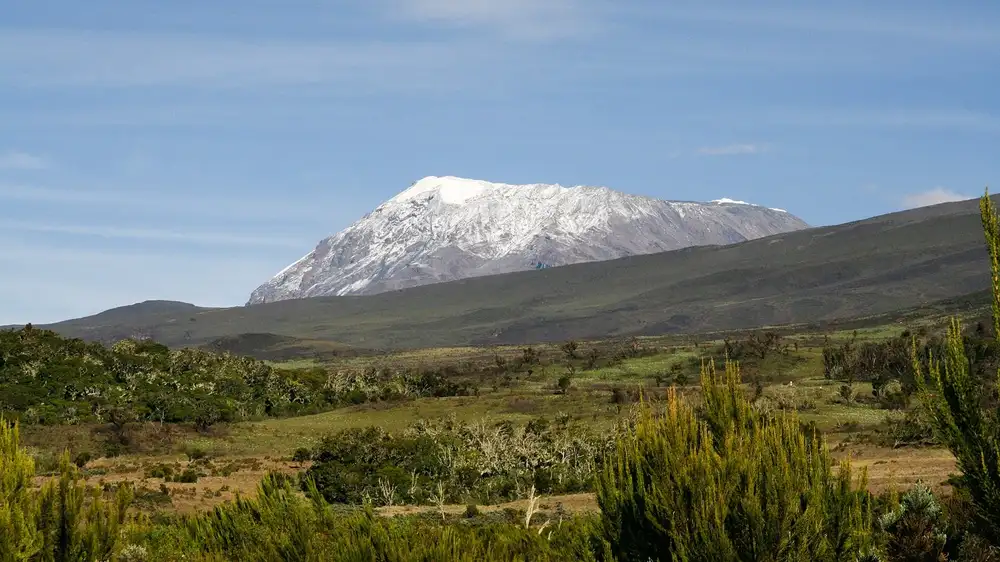
The Rongai route starts near the Kenyan border, after a drive around the eastern side of the mountain. The first day passes farmland and pine plantations before reaching the edge of the forest and the first camp. The northern landscape is wilder and more open than the south, with fewer trees and a feeling of remoteness. Wildlife such as antelope or colobus monkeys is sometimes seen in the lower sections, and the views across the plains towards Kenya are memorable.

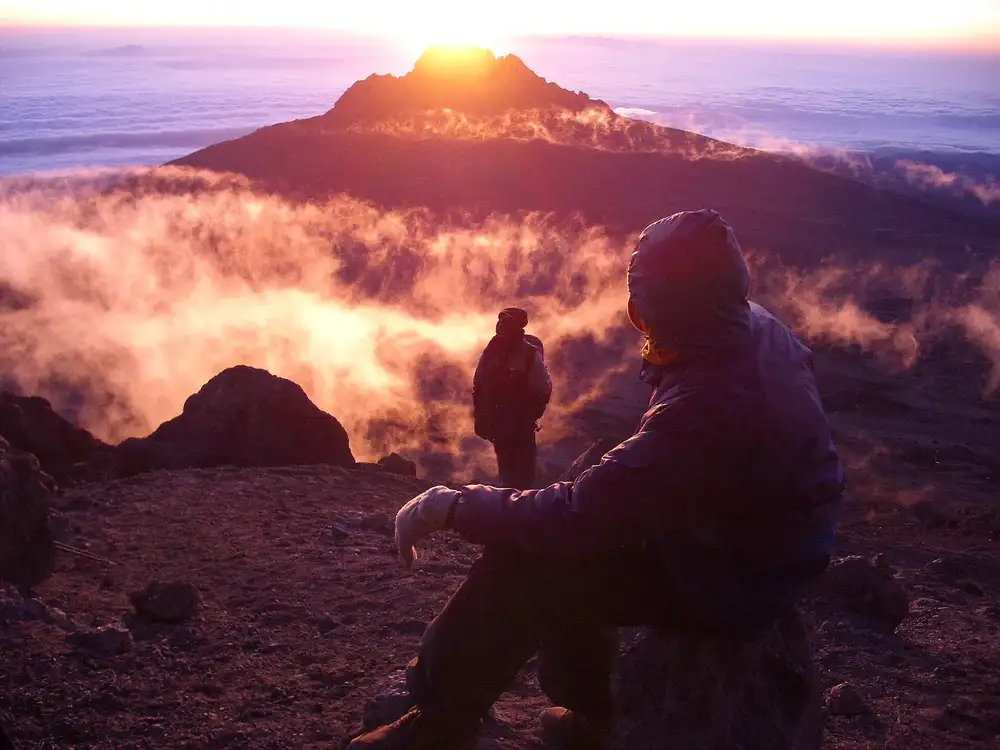
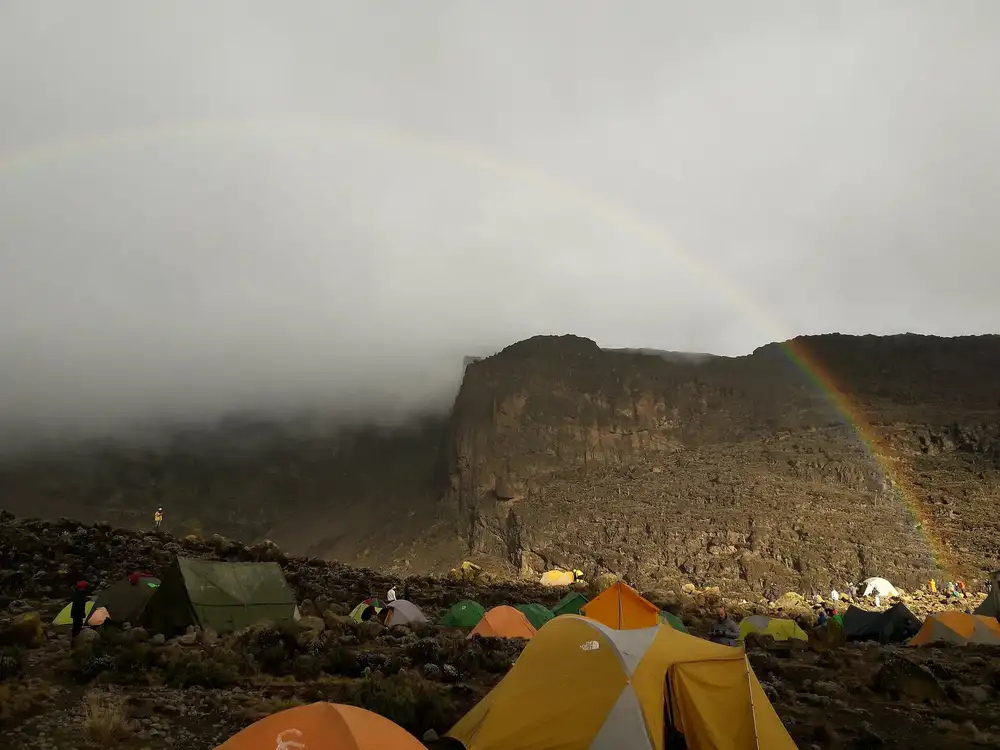
The trail climbs steadily through open country with views north over the plains. Some versions of the route pass the Mawenzi Tarn camp below the jagged peaks of Mawenzi, a good spot for an acclimatisation walk. Mawenzi Tarn is a small lake beneath the dramatic peaks of Mawenzi, the second summit of Kilimanjaro. It is a beautiful place to spend a night and a good place for acclimatisation, as the walk up gives you time at a higher altitude before descending to sleep.

Climbing in the rains

The northern side of Kilimanjaro receives less rain than the southern slopes, which makes Rongai a sensible choice in the wetter months. It is still a high-altitude climb, and nights at camp are cold, but the chance of staying dry during the day is higher. That makes Rongai a practical choice for climbers whose dates fall in the shoulder or wet seasons.

Even in the dry season, the route's quieter atmosphere appeals to climbers who would rather avoid the busier camps of the south. The route is less crowded, so camps are peaceful, and climbers often enjoy the sense of space. It combines well with a safari afterwards, as the drive back from the eastern side to Arusha is straightforward.

Summit and descent

Rongai reaches Kibo Hut for the summit night, then climbs to Gilman's Point and along the crater rim to Uhuru Peak. The final climb from Kibo Hut is steep, and most climbers reach the rim at Gilman's Point as the sky begins to brighten. From there, the walk along the rim to Uhuru Peak takes about an hour or more, depending on the conditions.

The descent follows the Marangu route on the south-eastern side, so you see both sides of the mountain during the climb. Descending by Marangu also means you finish on a well-maintained path with huts along the way, and the final walk through the forest is a gentle end to the climb.

Plan this climb

12 Days Climb Kilimanjaro and Serengeti Safari

Read our Kilimanjaro preparation guide

More details

6 – 7 days route begins at the northern side of Kilimanjaro. We walk through a true wilderness area towards the toothed Mawenzi Peak . The Rongai route is a steady ascent and is favorite by those with little experience

The seven-day version of the Rongai route (via Mawenzi Tarn) is the route of choice for those looking for an easy climb with excellent success rates, but away from the crowds, with great scenery and a wilderness feel to it. It is slightly more expensive.

The Rongai route is the only climb route that approaches Kilimanjaro from the north. The descent is in the south-east via the Marangu route, so you get to see both sides of the mountain.

The extra transport cost makes a Rongai route climb more expensive. It is also more expensive because there are less demand and fewer budget operators.

The Rongai route has a reputation of being less scenic, but even if there is not quite as much variety as on Machame, it is still a spectacular route, especially in the later days. The camp beneath Mawenzi Peak is one of the most scenics on the mountain.

Rongai is also one of the routes where seeing wildlife on Kilimanjaro is still possible.

The Rongai climb has the same easy, gradual climb profile as the Marangu route. It rises very steadily, there aren’t any steep climbs involved, no major ups and downs.

However, the camps are staggered a lot better than on Marangu. On your last day before the summit attempt, you only ascend a few hundred meters, and you have all afternoon to rest and acclimatize.

With a good operator, you have a 90 – 93% chance to make it to the crater rim, and 90 – 97% will make it to Uhuru Peak.

(If you have some trekking experience your chances to make it to the summit could be as good as 90%. (The remaining 10% come down to the weather, individual preparation, individual altitude tolerance, and unforeseen mishaps.)

The Rongai route has another important advantage: the northern side of Kilimanjaro is a lot drier than the other side. Your chances NOT to get soaked on the first days are excellent. Especially if you climb Kilimanjaro during one of the wetter periods of the year, using Rongai makes a lot of sense.