
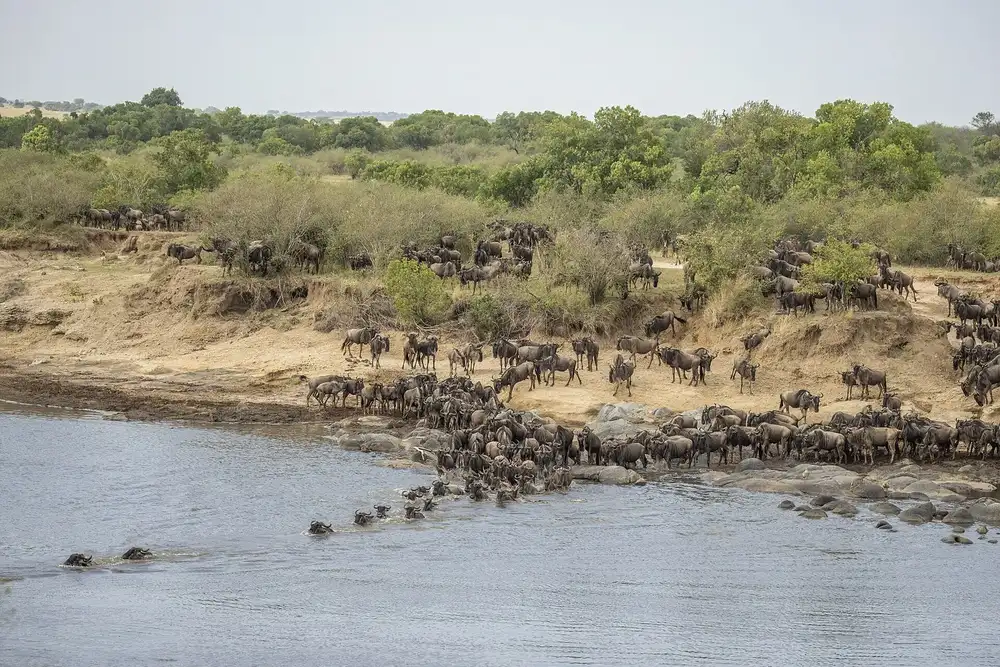
The Great Migration is not a single event but a year-round cycle. More than a million wildebeest, together with zebra and gazelle, move in a large circle through the Serengeti and across to Kenya's Maasai Mara, following the rains and the fresh grass.
January to March: calving in the south
The herds are on the short-grass plains of the southern Serengeti and around Ndutu. Thousands of calves are born in a few weeks, and predators are close by.
April to June: moving north
The herds move through the central and western Serengeti. In May and June they often cross the Grumeti River in the western corridor.
July to October: the northern Serengeti
The herds reach the north, near Kogatende and the Mara River, where dramatic river crossings take place. This is the most photographed part of the migration.
November and December: back to the south
The short rains bring the herds back to the southern plains, ready for the next calving season.
A note on timing
The herds follow the rains, which change from year to year. We plan around where the herds are most likely to be and confirm closer to your dates, but no one can guarantee a particular sighting.
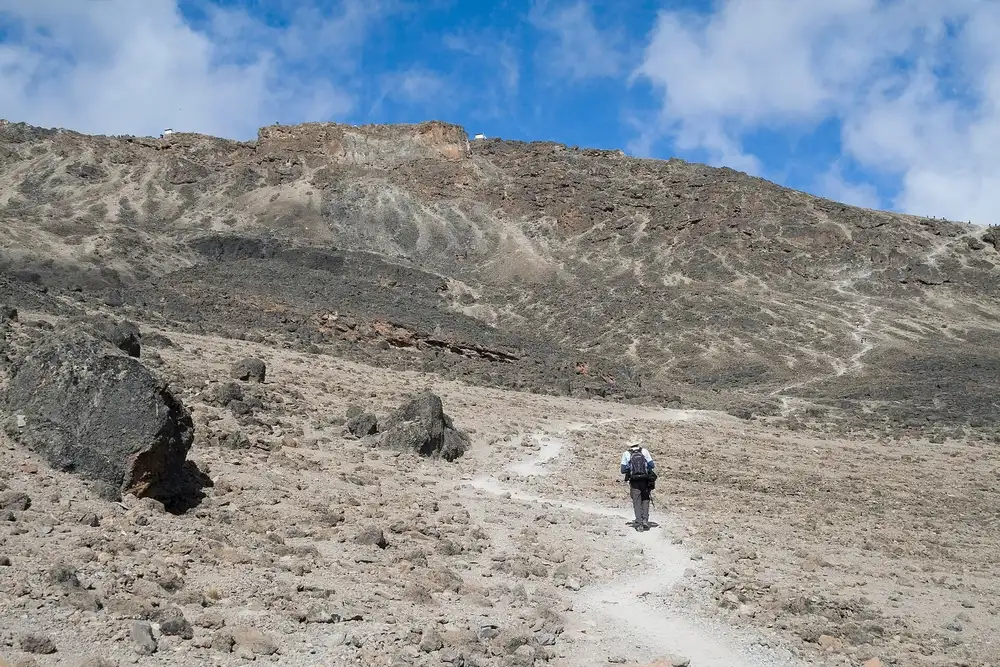 Best Kilimanjaro Route
 Machame vs Marangu Route
 Tanzania Safari and Zanzibar: Complete Guide