


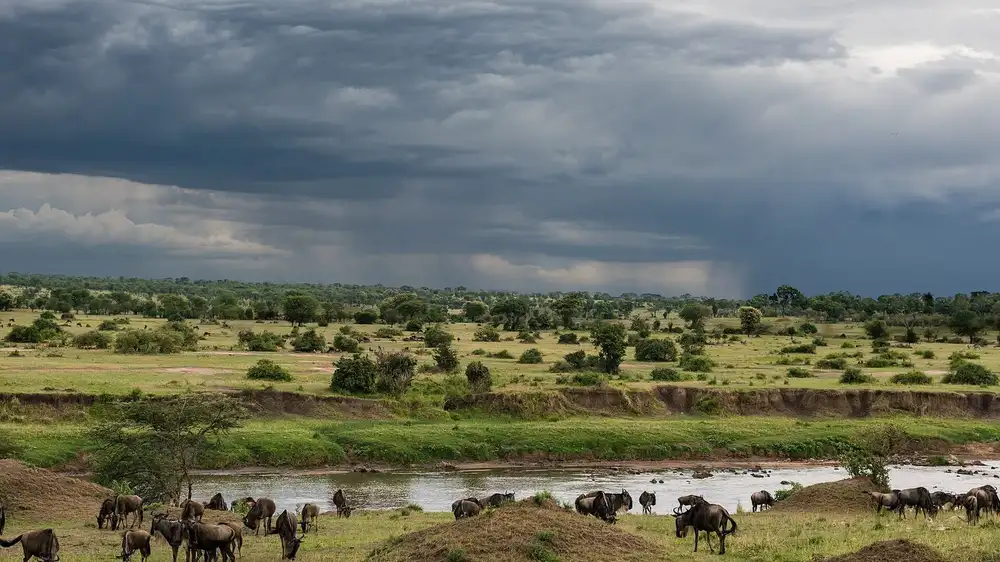
Tanzania's weather depends on the season and the altitude, and varies a lot across the country.
Seasons
- Dry season: June to October, with clear skies and cool nights
- Short rains: November and December, usually brief showers
- Hot and drier: January and February
- Long rains: March to May, with the heaviest rain in April and May
Temperatures
Arusha is pleasant year-round, and the Ngorongoro rim and the highlands are cool, so a warm layer is essential. The Serengeti and Tarangire are warmer, and the coast and Zanzibar are hot and humid. Kilimanjaro's summit is below freezing every night.
Altitude changes everything
Temperatures fall by around six degrees Celsius for every thousand metres you climb. That is why the Ngorongoro rim, at more than 2,000 metres, can be cold in the evening, while the plains below are warm. In the cooler months, early morning game drives in an open vehicle can be chilly, so a fleece, a jacket and even gloves are useful. As the day warms up, you can remove layers.
Pack a fleece and a light jacket even if your trip is in the hottest months, and add a warm hat for early-morning game drives in an open vehicle. The higher areas, such as the Ngorongoro highlands and the slopes of Kilimanjaro, can be cool all year, while the coast and Zanzibar are warm and humid.
Rain on safari
In the rainy seasons, showers usually come in the afternoon or at night, and mornings are often clear. Some roads become muddy and slow, and a few remote areas are hard to reach. Rain usually falls in short, heavy showers, often in the afternoon, followed by clear skies. Roads can become muddy, and some areas may be harder to reach, but the landscape is green and the light is beautiful.
The rains also bring green landscapes, flowers, newborn animals and migratory birds, and far fewer vehicles at the sightings. With fewer visitors and lower prices, the rainy season is a good time for travellers who are flexible and enjoy a quieter safari.
 First-Time Safari Guide
 Tanzania Visa
 Best Time to Visit Tanzania